• Skip to primary navigation
  • Skip to main content
Chestnut Mountain Village

Chestnut Mountain Village

A ministry of Chestnut Mountain Ranch

  • Home
  • About Us
  • Family Advocacy Ministry
  • CarePortal
  • Events
  • Resources
    • All In Foster Care Summit – Archive
  • News & Articles
  • Contact Us
  • Show Search
Hide Search

Greg Clutter

The Match Is Met. The Mission Moves Forward.

A Challenge to Multiply Impact

In November 2025, we invited others to join the Be The Village Match Challenge. Through this effort, every gift was matched dollar for dollar, up to two hundred thousand dollars. The goal was clear. We aimed to double the impact, strengthen the work, and expand the reach.

Now, we are grateful to share an important update.

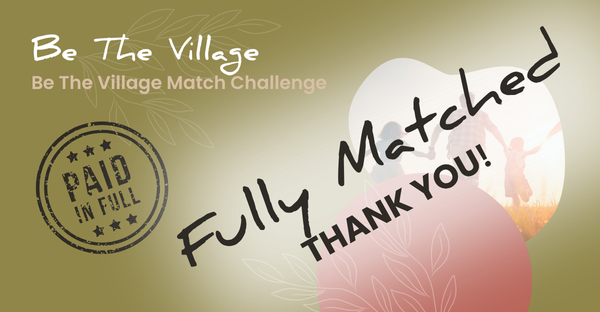
The match has been fully met.

Be The Village Match Challenge fully met showing four hundred thousand dollar impact for West Virginia children and families

From Generosity to Momentum

Donors, partners, and friends responded with remarkable generosity. As a result, two hundred thousand dollars has become four hundred thousand dollars invested directly into the work of The Village across West Virginia.

This moment represents more than a milestone. Instead, it marks meaningful momentum.

Expanding What Is Working

From the beginning, The Village has guided, equipped, and connected churches so that vulnerable children and families never walk alone. That vision remains unchanged. However, the scale of what can now be accomplished has grown significantly.

Because of this investment, The Village can strengthen its operational foundation, expand its regional presence, and deepen support for families, churches, and child welfare partners. In turn, more churches can engage, more families can receive support, and more communities can move toward a future where there is more than enough.

Proven Impact in Communities

Already, we have seen what happens when churches step into this work with clarity and support. Families stay in the fight, and children experience greater stability. As these efforts continue, communities begin to change in lasting ways.

This impact is not theoretical. It is happening across West Virginia.

A Shared Accomplishment

Every person who gave, prayed, encouraged, or supported this effort played a role in reaching this goal. Because of that collective effort, this work continues to grow in both reach and effectiveness.

Although the match has been met, the mission continues.

Looking Ahead

There is still work to do, and families still need support. At the same time, churches continue to step forward with willingness and purpose.

For now, we pause with gratitude.

Thank you for being part of this journey. Because of you, families caring for vulnerable children do not walk alone.

Restoring hope to children and families continues because of your faithful support.

From One County to Many: CarePortal Momentum Builds

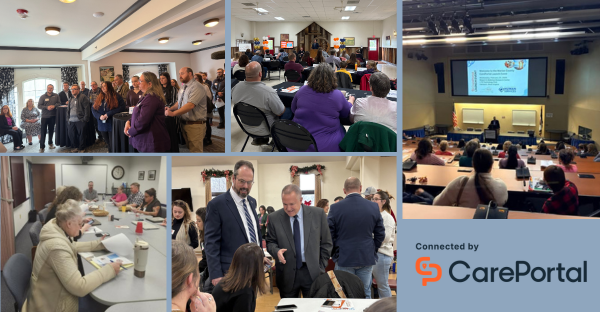
Momentum continues to build across West Virginia as CarePortal expands and connects local churches with real, immediate needs of children and families in crisis.

What began with a single launch in Monongalia County in April 2025 has grown into a multi-county movement. CarePortal is now active in Monongalia, Preston, Harrison, and Marion Counties. This month, Taylor County becomes the fifth countywide launch. Plans are already in motion to expand into Barbour County, with additional growth expected in the months and years ahead.

How CarePortal Works

A Growing Network with Real Impact

This growth represents more than new locations. It reflects a strengthening network of churches, child-serving professionals, and community leaders working together in meaningful ways.

Through CarePortal, professionals share real-time, verified needs. Churches respond quickly with practical support. These actions strengthen families and help prevent unnecessary foster care placements.

The impact is already clear. In a short period of time:

  • More than 400 children have been served
  • Over 50 churches are actively engaged
  • More than $115,000 in economic impact has been generated

These numbers continue to rise as more communities join the network.

Communities Coming Together

Recent launches in Harrison and Marion Counties show what is possible when communities unite around a shared vision. Each event has brought together state leaders, local churches, and community partners.

These gatherings do more than celebrate progress. They invite others to take part and help expand the work.

Now, Taylor County is stepping into that same story.

Taylor County Launch Event

On Wednesday, April 15, community members will gather in Grafton to celebrate the official launch of CarePortal in Taylor County.

The event will include:

  • Remarks from state and local leaders
  • A live demonstration of how CarePortal works
  • A clear look at how needs move from professionals to churches

Attendees will see how one request can lead to real support for a child or family in need.

Continued Growth Across West Virginia

This expansion is made possible through the partnership between the West Virginia Department of Human Services and Chestnut Mountain Village. It is also driven by churches and community members who choose to get involved.

Together, DoHS and The Village will continue to grow this network across West Virginia in the months and years ahead.

CarePortal is changing how communities care for children and families. It creates a simple and practical way for people to step in, meet real needs, and make a lasting difference.

The work is growing. The network is expanding. More communities are discovering what happens when people come together to care for their neighbors.


Learn more about careportal

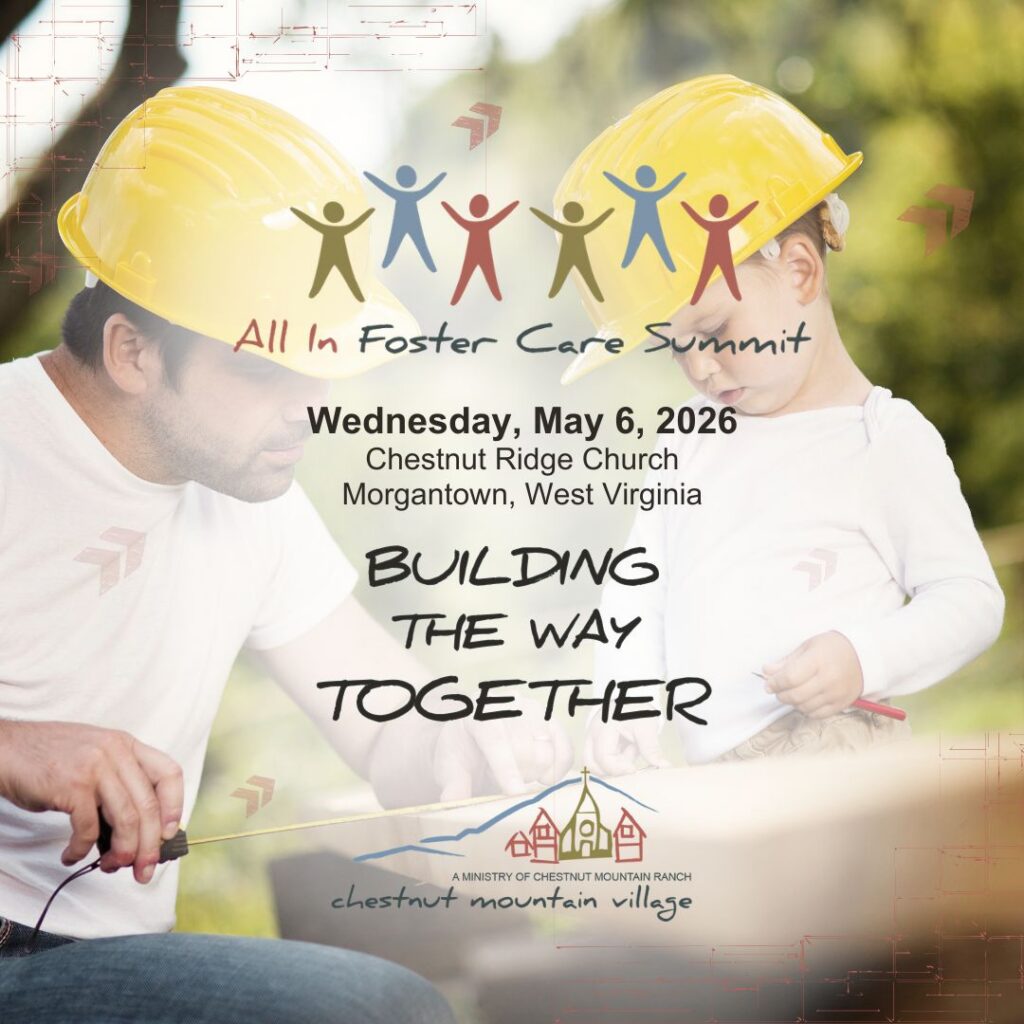
REGISTER NOW: 2026 All In Foster Care Summit

This Summit is more than another date on the calendar. Instead, it serves as a focused gathering that encourages clear action. At Chestnut Ridge Church in Morgantown, pastors and church teams will connect with child welfare professionals, foster alumni, foster, adoptive, and kinship families, and community leaders. Through that connection, participants will strengthen collaboration across our state.

West Virginia continues to report one of the highest per capita rates of children in foster care. While the need remains urgent, the opportunity for meaningful partnership is just as real. For that reason, the All In Foster Care Summit WV moves beyond awareness and into alignment.

registration closed

Building the Way Together

This year’s theme, Building the Way Together, draws from the Biblical story of Nehemiah. When Jerusalem’s walls lay broken and the city stood exposed, the people did not stand at a distance. Instead, they organized. They took responsibility. Then they rebuilt with focus and persistence.

In the same way, West Virginia needs more than sympathy. Real change requires clear roles, coordinated effort, and people who remain committed when the work becomes difficult. Because of that reality, the Summit emphasizes teamwork rather than isolated effort.

Short bursts of energy will not solve complex challenges. Instead, sustained collaboration across churches, agencies, nonprofits, and families will strengthen support for children.

What You Can Expect

The 2026 All In Foster Care Summit WV will challenge and equip participants to take clear next steps.

Attendees will:

  • See the realities facing children and families clearly, without minimizing complexity.
  • Move beyond good intentions and learn how to serve as part of a coordinated team with shared responsibility.
  • Strengthen collaboration between churches, child welfare agencies, and nonprofit partners.
  • Learn how to provide practical, ongoing support for foster, adoptive, and kinship families.
  • Leave with clear pathways for engagement in their local communities.

Throughout the day, participants will hear keynote presentations from the main stage, attend two breakout workshop sessions, and connect intentionally with others over lunch. In addition, speakers will share practical strategies and clear next steps that attendees can apply immediately in their own communities.

Featured Speakers

This year’s Summit includes respected national leaders in foster care and faith-based engagement:

  • Andy Cook, CEO and President, Promise686
  • Brian Mavis, Founder, America’s Kids Belong
  • Jason Weber, Director, More Than Enough – Christian Alliance for Orphans

Alongside these national voices, leaders from across West Virginia will share insight grounded in experience. As a result, participants will gain both encouragement and direction.

Event Details

The All In Foster Care Summit WV brings churches, professionals, and families into stronger alignment across our state.

Date: Wednesday, May 6, 2026
Time: 9:00 AM – 4:00 PM
(Coffee and connection begins at 8:15 AM)
Location: Chestnut Ridge Church, Morgantown, WV
Registration Fee: $25 per person (Lunch included)

Mission West Virginia anticipates offering continuing education credit for eligible sessions. Likewise, certified foster parents may receive CE certificates for qualifying content.

Who Should Attend?

  • Pastors and church teams seeking clarity for their congregation’s next step.
  • Church volunteers, members, attendees, and individuals who want to help address child welfare challenges in West Virginia.
  • Child welfare professionals who desire stronger community partnership.
  • Foster alumni who want to contribute to meaningful change.
  • Foster, adoptive, and kinship families seeking sustainable support.
  • Community leaders committed to practical solutions.

If you care about strengthening what protects children and families in West Virginia, this Summit is for you.

Register Now for the All In Foster Care Summit WV

Lasting change does not come from isolated effort. Rather, it grows through shared responsibility, organized collaboration, and sustained commitment.

On May 6, we will not simply discuss what is broken. Instead, we will focus on strengthening what protects children and families across our state.

Registration is now open. Secure your seat today:

registration closed

Join us as we build the way forward together.

How It started. How It’s Going. And Why It Matters.

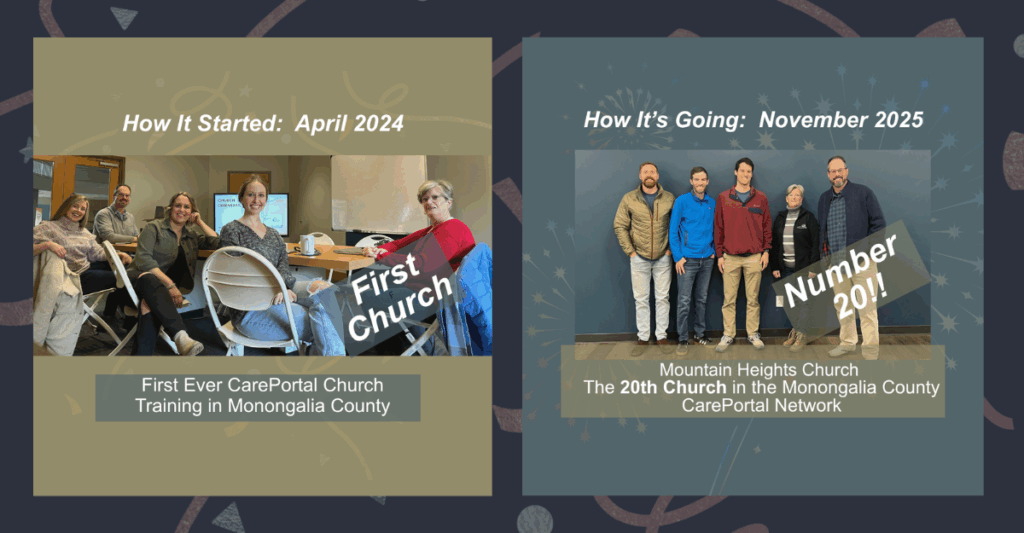
In April 2024, Chestnut Mountain Village, two Monongalia County churches, and a local family serving organization launched a small but ambitious “proof of concept” to see whether CarePortal could help meet the real needs of children and families in crisis.

Through CarePortal, local child serving agencies are able to enter needs such as beds, clothing, transportation help, or household essentials. Those needs of local children and families are then immediately shared with nearby churches and community members who can respond in real time. CarePortal creates a simple connection point that allows people to meet practical needs quickly, stabilize families before crises escalate, and support children safely in their own homes whenever possible.

That early team believed something simple. The resources were already in the community. The willing people were already there. What was missing was connection.

Earlier this month, Mountain Heights Church became the 20th church to join the Monongalia County CarePortal network. From a tiny experiment to a growing movement, a local idea is becoming a community wide effort.

Side by side photos showing the first CarePortal church training in April 2024 and the twentieth participating church in November 2025, illustrating the rapid CarePortal expansion in West Virginia as more churches join the network.

Since that early 2024 trial, Chestnut Mountain Village and the West Virginia Department of Human Services have partnered not only to pilot CarePortal in Monongalia and Preston Counties, but to expand this work in those counties and prepare to launch in four additional counties in the near future.

Deep gratitude to Chestnut Ridge Church, CMA Church of Morgantown, and Compass Women’s Center for being the original West Virginia CarePortal trailblazers. And sincere thanks to every church, volunteer, and partner who continues to prove that “not enough” does not have to be the story. We are working toward more than enough for vulnerable children before, during, and beyond foster care.

Passing Through the Waters Together: FAMs Give Hope

A group of adults and children standing together in a shallow creek beneath a bridge in West Virginia, illustrating community support and how Family Advocacy Ministries support foster families with practical care and presence.

“When you pass through the waters, I will be with you; and when you pass through the rivers, they will not sweep over you.” Isaiah 43:2a

When a family steps out in faith and opens their home to foster care or adoption, they need to know they are not walking the journey alone!  Family Advocacy Ministries, or FAMs, provide community, encouragement, and emotional and spiritual support for families when they need it the most.  Stepping into foster care can feel like jumping into the rapids with a child who’s navigating waves of grief and uncertainty.  A Christ-centered community offers hope amid the hard things and reminds families that God walks with them through difficult things and broken places.  He is close to the broken-hearted and never leaves us alone in our pain.

In a recent interview with the Saidi family, Emily, a highly experienced foster and adoptive mother, described how her church community supported them as they navigated the difficult realities of foster care and adoption.

The Saidi’s story includes many highs and lows, including a tremendous loss when a little girl they were in the process of adopting passed away before she was ever fully transitioned to their home from a shelter. The family was comforted by their church community, and people who had never even met this little girl showed up for the Saidi family at her funeral.

While they were still processing this heartbreak, another precious child entered their story. In Emily’s own words:

“Not long after, we were contacted about another little girl, Shelby, from the same shelter. She has special needs and requires a lot of care and supervision. We didn’t know if we had what it took to care for her. Initially, I felt trapped in my house because Shelby would run off in public or fall to the floor and refuse to move. How could I live if I couldn’t go anywhere?  My church and my care community sent me a specialty stroller for Shelby. That stroller was the difference between Shelby growing up in a shelter or being adopted by our family. It gave us hope. It reminded us we were not alone. It gave us the ability to live. Shelby was adopted this year, and we could not be more thrilled that she is an official Saidi.”

“That stroller was the difference between Shelby growing up in a shelter or being adopted by our family. It gave us hope. It reminded us we were not alone.”

The Saidi’s journey is a poignant reminder that when a church shows up with steady love and practical help, families can keep going and children can finally come home.  In this case, it was a community of people who showed up during the hard times, and a special stroller that made all the difference, but everyone can do something!  How might you and your church make a difference for a family in your local area? As we prepare for the holiday season, we are grateful for a loving God who loves us, sees us where we are, and meets us there.  We celebrate the incarnation, God’s plan to send His son Jesus into the world to save us from sin and darkness.  Our God saw us in our deepest need and He came towards us in the midst of our brokenness. Through foster care, adoption, and the ministry of the local church, we share in that same movement of God by stepping toward children and families in their need just as Christ first stepped toward us.

Be The Village: A Vision Worth Doubling

We were excited to announce the launch of our Be The Village Match Challenge in November 2025. For six months, every financial gift to The Village will be matched dollar for dollar, up to two hundred thousand dollars. The generosity of donors will immediately double in impact and help strengthen and expand The Village’s work across West Virginia.

  • Be The Village and Double Your Impact online at THIS LINK.
  • Double Your Impact by mail HERE.

Four years ago, The Village began with a simple idea. Most West Virginia churches want to help children and families connected to foster care. Many simply do not know how or where to begin. The Village stepped into that gap with a clear purpose. Guide, equip, and connect churches so that vulnerable children and families never walk alone.

West Virginia continues to have the highest rate of children in foster care per capita in the nation. There are not enough foster families. Families who do step forward often lack the steady support they need to remain in the work. Yet something unmistakable has become clear. It is working. When churches are guided, equipped, and supported, families stay in the fight, children receive stability, and communities begin to change.

Foster families describe this reality with honesty and gratitude.

  • “We could not continue to do this without the people around us. Their support is the only reason we are still in it.”
  • “Support has kept us in foster care. Without it, I do not think we would still be here.”
  • “The community of people surrounding us was vital in helping us walk through that season and come out on the other side saying we would not change a thing.”

Support is not theoretical. It is meals. It is respite. It is prayer and encouragement. It is a ride, a moment of relief, or a volunteer showing up with something small that becomes something significant. It is the church saying to a family, “You will not face this alone.”

The evidence of progress is unmistakable. Nearly sixty churches across seventeen counties have been involved. More than 100 families are being supported, have been supported, or are otherwise in the process of receiving support through Care Communities. More than six hundred volunteers have stepped forward. CarePortal and other activities have strengthened cooperation between churches and child welfare staff, and collaboration across counties continues to deepen.

Pastors and ministry leaders see the change.

  • “It has been a profound blessing for us as a church because it really does work.”
  • “The ministry brought order to all of the hearts of the people so that everyone had a place to do the thing God had called them to do.”
  • “It is not that hard to make a world of difference.”

Volunteers share the same experience.

  • “When you provide a meal or a ride or babysit for a night, it may seem small, but it is the difference between a family making it or giving up.”
  • “Being part of a care community means you get to be the light for families who are in the darkness. That is powerful.”
  • “It is not just helping kids. It is helping families stay in the fight and not quit.”

The Village vision looks toward a future where trained team members serve in communities across every region of West Virginia, working alongside churches and local partners. They will guide and equip churches to confidently support foster, adoptive, kinship, and vulnerable families in meaningful and sustainable ways. Using activities and infrastructure like CarePortal, these team members will strengthen partnerships with state and local agencies so churches can respond quickly in moments of crisis. As this presence grows and collaboration deepens, communities will move from not enough families and support to more than enough for every vulnerable child. This unified statewide network will enable West Virginia churches to care for children and families with clarity, connection, and lasting impact.

As of today, The Village presence and impact is strong in several regions. Families are receiving support, churches are stepping into their calling, and cooperation with child welfare partners continues to grow. Now it is time to accelerate, expand, and strengthen this work so that every community in West Virginia has access to the support that is already proving effective.

This is what the Be The Village Match Challenge makes possible.

Matched gifts will strengthen the operational foundation, expand the team, and increase our presence across the state while deepening what is already in place.

As this year concludes and as we enter 2026, we invite you to consider a matched financial gift to The Village. When you give, you are joining a movement of churches, volunteers, and partners determined to ensure that families caring for vulnerable children never walk alone.

We humbly ask that you prayerfully consider participating in this Match Challenge. You will equip more churches. You will support more families. You will help move West Virginia from not enough to more than enough families, support, resources, and connection for vulnerable children.

To participate in the Be The Village Match Challenge you can:

  • Give and double your impact online at THIS LINK.
  • Double your impact by mail HERE.

Thank you for being on this journey with us!!

Bridging the Gaps for Children and Families

Recently, there was a family who needed a bridge. Their small home sat in a rural part of West Virginia, and the only way to reach the road was by crossing a narrow footbridge over a creek. The bridge had fallen into disrepair, and the condition was quietly brought to the attention of local Child Protective Services (CPS) as a safety concern. The children in the home needed to cross that bridge every day to catch the bus for school. The family was doing their best but could not afford the repair.

In an effort to help the family, CPS staff reached out to a trusted local church to see if they could help.  That church had partnered with Chestnut Mountain Village to launch a Family Advocacy Ministry and had been active in the community for several years providing prayer, meals, childcare, encouragement and relational support for families, as well as other activities to meet practical needs.  The FAM ministry model is a simple and sustainable way for churches to support foster, adoptive, kinship, and vulnerable families.

Over those years, the FAM Advocates at the church developed genuine trust with local Child Protective Service workers through National Hospitality Week, service projects for vulnerable families, and volunteer roles that kept the Advocate connected with CPS staff. It was this foundation of trust and a relationship built over time that prompted CPS to reach out to the local church when the unsafe footbridge came to their attention.

At first, the church dismissed the request as it felt far beyond their capabilities. Their volunteers were trained to provide meals and childcare, not to build bridges. As the Advocate later explained, “We didn’t feel like we had the skills, the resources, or the know-how, but the Lord kept bringing this request back to us, so we decided we could send someone to take a look.”

A church member with construction experience visited the home and assessed the bridge. He reported that the project was likely manageable in a single day with a small team, but the materials would require funds far beyond the ministry budget. Once again, it seemed there was a gap between what the family needed and what the church could provide, but the Lord was still working behind the scenes.

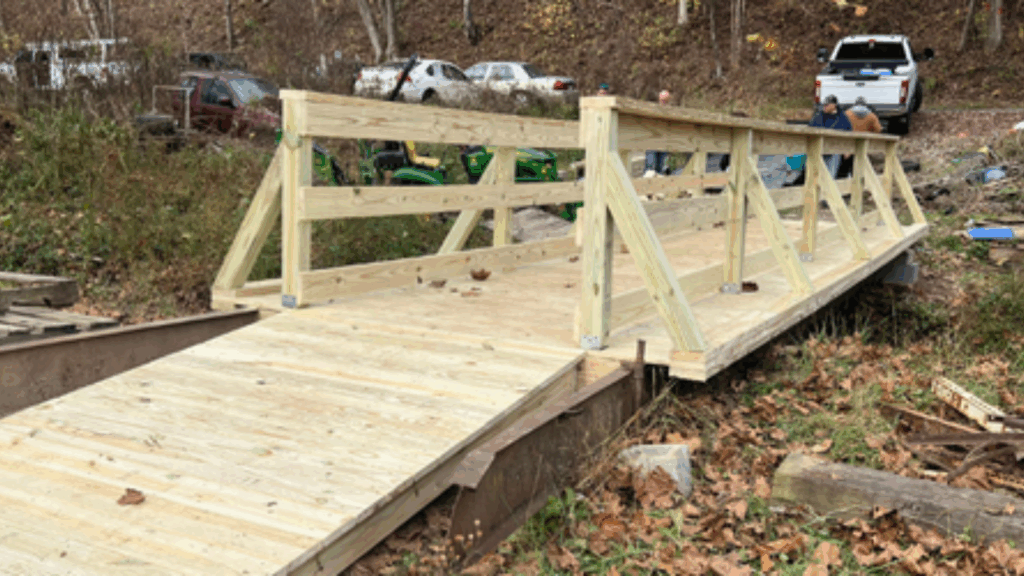
In a follow up conversation, the Advocate explained the situation to the CPS worker. The CPS professional immediately shared that designated state funds were available to purchase the necessary materials. They simply needed someone willing to oversee the project and complete the work. Within a few short weeks, the effort was coordinated, the supplies purchased, the volunteers organized, and the project completed. The family now has safe and reliable passage to their home.

A newly rebuilt wooden bridge spanning a small creek, providing safe access for a rural West Virginia family and illustrating how churches and child welfare partners can close critical gaps for children and parents.

Those who care for children and families know that gaps appear every day, but it does not have to be that way. In this story, everything the family needed already existed in their community, but there were gaps. There was a gap between those who saw the need and those who held the resources. There was also a gap between two different organizations, each carrying a key piece of the solution.

When the Advocate was asked, “How did this happen?” she shared with a big smile, “God made a way.”

With trust, communication, and steady collaboration, the Lord used the relationship between the church and CPS to bridge those gaps and provide what was needed for this family and these children. As organizations, agencies, and churches build deeper trust and work together, we will see more bridges and fewer gaps for West Virginia’s children and families.

Your financial gift to The Village strengthens the partnerships that close these gaps, allowing more children and families to receive the practical, life-changing support they need. Prayerfully consider making a one time or monthly gift to support West Virginia’s most vulnerable children and families.

When the Church Answers the Call

Psalm 10:14 says, “But you, God, see the trouble of the afflicted; you consider their grief and take it in hand.”

That truth is seen every time the Church notices the pain of others and chooses to step in with compassion and care.

Not long ago, a foster family supported by their local West Virginia church faced a difficult moment late one evening with their teen. They tried to reach their agency and case team, but it was after hours and help was hard to find. The weight of the situation felt overwhelming. So they called a member of their Care Community for support and for someone to talk to. The phone was answered right away. Guidance was given, prayer was shared, and the encouragement they received gave them the strength and connection to make it through the night.

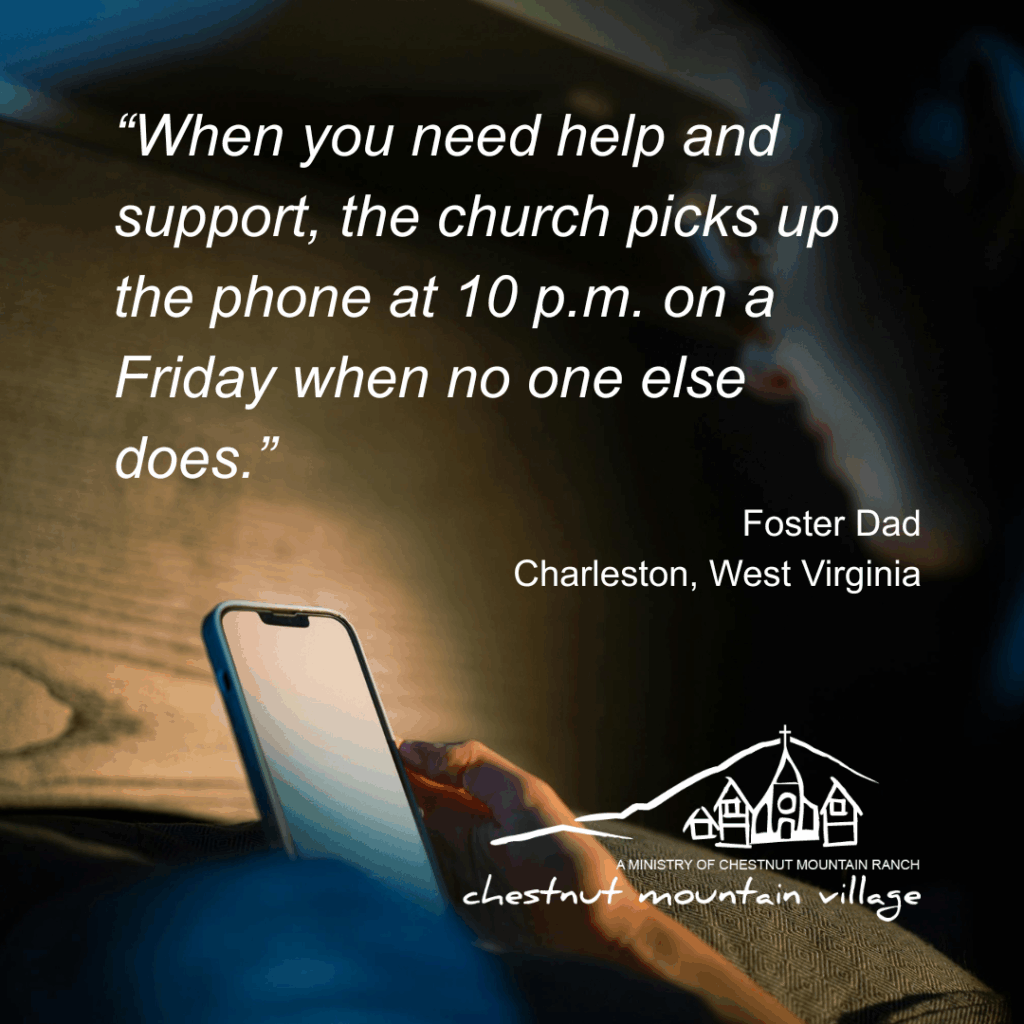
Later, the foster father said, “When you need help and support, the church picks up the phone at 10 p.m. on a Friday when no one else does.”

This is what it looks like when God’s people live out Psalm 10:14. The Church sees the trouble, considers the grief, and takes it in hand. Through encouragement, prayer, and presence, a foster family is reminded that they are not alone and that God truly sees them through His people.

You can answer the call by participating in the Be The Village Match Challenge. Every financial gift is doubled through May 2026. For a limited time, a $25 gift becomes $50, $50 turns into $100, and your $100 turns into $200.

BE THE VILLAGE: DOUBLE YOUR IMPACT NOW

Foster Care Placement Stability Through Church and Community Support

New research in the Journal of Public Child Welfare confirms what West Virginians are witnessing through local ministries every day. When churches and communities surround foster families with support, foster care placement stability improves and children experience the consistency and love they need to heal.

The study, “Examining the Impact of Participation in a Foster Parent Support Program on Child Welfare Outcomes in Georgia,” was conducted by Dr. Ryan Hanlon of the National Council for Adoption, Abigail Lindner of Worcester Polytechnic Institute, and Katherine Garcia Rosales of Westat. Using three years of data from the Georgia Department of Human Services and the federal Adoption and Foster Care Analysis and Reporting System, the team examined what most affects foster care placement stability. They compared 241 children whose foster families participated in the Promise686 support program with more than 20,000 children in Georgia’s general foster care system.

The results were striking. Children supported through Promise686 experienced far greater placement stability. On average, they had 2.15 placements per child compared to 2.77 for children not involved in the program. For every 1,000 children in care, that means about 620 fewer moves between homes. Each avoided move represents a child who keeps relationships, routines, and trust, key factors for emotional healing and healthy development.

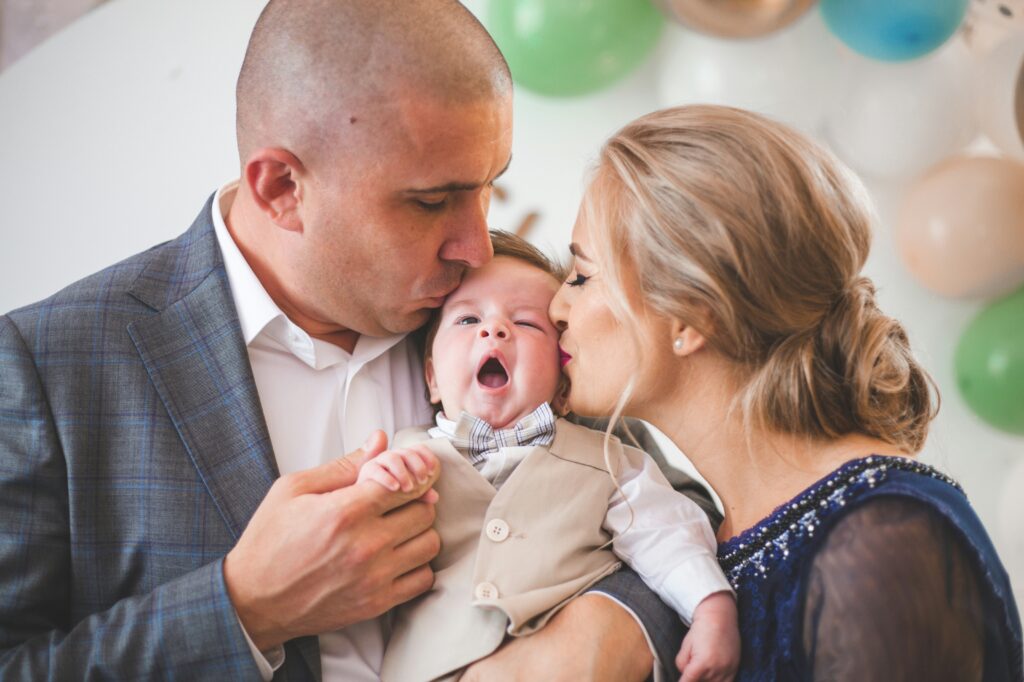
The image illustrates the warmth, security, and love that define foster care placement stability, showing how consistent, supportive relationships help children feel safe, valued, and connected within a family.

Children thrive when their caregivers are steady and supported. The study highlights that stability comes when families are surrounded by people who meet practical needs and offer encouragement. This kind of care makes it more likely that foster parents continue serving, which directly benefits children.

Promise686 builds networks of church and community volunteers who wrap around foster families. These volunteers bring meals, offer childcare, help with errands, and provide prayer and friendship. The study’s findings show that such networks make measurable differences in keeping children stable in their placements and improving outcomes overall.

Here in West Virginia, Chestnut Mountain Village serves as the Mountain State’s sole implementing affiliate for Promise686. Through Family Advocacy Ministries (FAMs) and Care Communities, The Village equips churches to provide the same kind of consistent, Christ-centered support described in the study. These partnerships help foster families endure, children remain connected, and communities grow stronger.

Funded by the Morgridge Family Foundation, this research offers clear evidence of what many already believe: stability in foster care begins with community. When families are supported and surrounded by caring people, children gain safety, belonging, and hope for the future.

How CarePortal Works

How CarePortal Works

CarePortal is a care sharing technology that drives action for local children and families in crisis. Watch this short video to see how CarePortal connects local churches and community members to meet the urgent needs of children and families.

Contact The Village today to learn how your church can be part of this life-changing work.

Contact The village to learn More about careportal

NOTE: CarePortal is currently available only in select counties in North Central West Virginia.

CONTACT THE VILLAGE TO LEARN MORE ABOUT CAREPORTAL

When Foster Parents Feel Undervalued, Misled, and Isolated: What the Research Tells Us—and How Communities Can Respond

Research shows foster parents often feel undervalued, misled, and isolated—highlighting the need for stronger foster parent support.

A new study published in Children and Youth Services Review highlights what many of us in the foster care community already know: foster parents often feel more like cogs in a compliance machine than valued members of a team. The article, “Undervalued, Misled, and Isolated: Foster Parents’ Experience of (Mis)attunement within Our Compliance-Centered System”, captures the voices of foster parents who describe their daily reality not as one of foster parent support and collaboration, but of disconnection and exhaustion.

The study found that rather than experiencing “attunement”—the sense of being seen, heard, and supported—most foster parents reported “misattunement.” That misattunement shows up in three striking ways:

  • Undervalued: Foster parents felt reduced to “baby movers,” rather than respected as caregivers who know the child best.
  • Misled: Promises of teamwork often dissolved into a lonely reality of handling crises with little backup.
  • Isolated: Despite constant demands from the system, parents described being left alone to navigate services, appointments, and decisions that deeply affect their foster children.

These findings are sobering. They highlight a fundamental misalignment in child welfare: compliance is too often prioritized over relationships. When this happens, the very people providing day-to-day care—foster parents—are left drained, unheard, and at risk of burnout.

Why Foster Parent Support Matters

When foster parents feel disconnected from the system, children pay the price. Placement instability rises. The likelihood of multiple moves increases. And the chance for steady, healing relationships—the very relationships children need to recover from trauma—diminishes.

The research also underscores that building strong, enduring connections between foster parents and the wider child welfare team is not just a nice idea. It is central to the well-being of children and the long-term commitment of foster families.

What Could Change the Story

The research points to a simple but profound truth: when foster parents feel listened to, respected, and included, everything changes. Practices that emphasize attentive listening, honest communication, and space for reflection help caregivers feel supported rather than dismissed. When these relational habits are prioritized, stress levels decline, collaboration increases, and the chances of stability for children improve.

These are not complicated fixes. They are small, human adjustments—checking in consistently, honoring the insight of foster parents, creating room for their voices in decision-making—that add up to healthier, more collaborative relationships across the child welfare landscape.

But systems change takes time. Policies shift slowly. Caseworkers remain overloaded. Foster parents and children cannot afford to wait.

The Role of Community Foster Parent Support

This is where local communities—especially churches and faith-based organizations—can step in. While state agencies struggle under the weight of compliance, neighbors, congregations, and community groups can provide the relational foster parent support that research shows foster parents so desperately need.

When churches come together to care for foster and kinship families—through meals, childcare, mentoring, prayer, and encouragement—they offer what the system cannot always provide: steady, human connection. These acts of presence and compassion communicate, you are not alone, and your work matters.

Yet it is important to acknowledge a potential pitfall. When churches or organizations rush into this space without structure, sustainability, and an informed understanding of child welfare, their efforts—though well-meaning—can unintentionally add more stress to families rather than relieve it. Short bursts of help without long-term support, or volunteer enthusiasm without training, may leave foster and kinship parents feeling even more isolated.

Communities cannot erase the complexity of child welfare. But they can counteract the isolation in ways that are thoughtful and effective. The Village exists to equip churches and faith-based organizations to step into this work with sustainability, structure, and wisdom—so that the help offered truly strengthens families, provides foster parent support for the long haul, and creates lasting change for vulnerable children.

Moving Forward Together

The research confirms what we see every day at Chestnut Mountain Village: foster parents carry a sacred but heavy role. When left undervalued, misled, and isolated, they cannot flourish—and neither can the children in their care. But when surrounded by attuned, supportive relationships, they find strength to persevere.

This is why The Village exists: to guide churches and communities in creating Christ-centered networks of care that bring hope and stability to vulnerable kids and families. Because while the system may remain compliance-centered, our communities can be relationship-centered.

And that shift—neighbor to neighbor, church to family, volunteer to caregiver—just might change the story.

MAN UP! Event: Answering the Call to Be Men of Impact

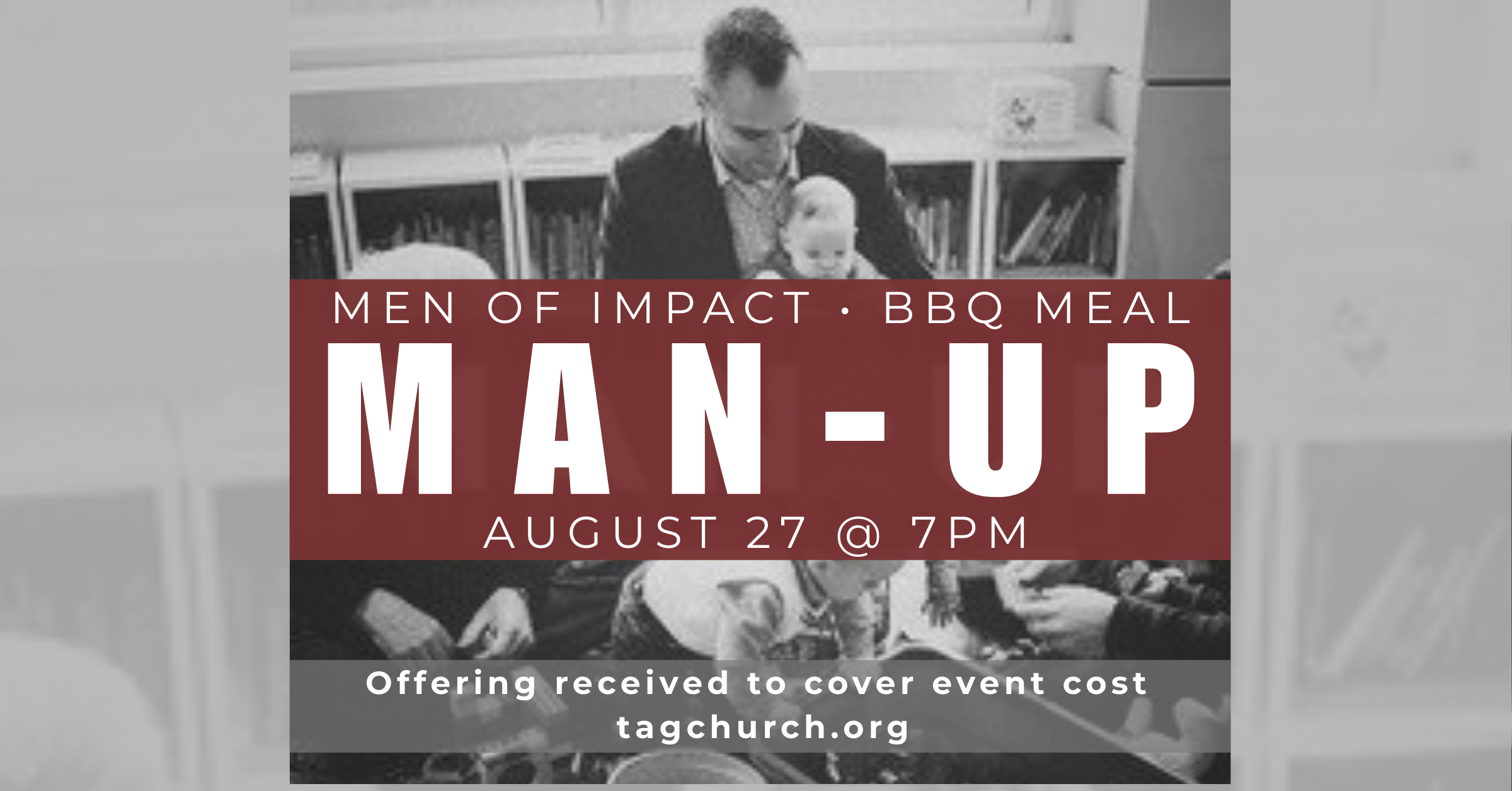
On Wednesday, August 27, 2025 men from across North Central West Virginia are invited to gather for “MAN-UP: Men of Impact!!!” at Trinity Assembly of God Church in Fairmont. This men’s event is designed to inspire, encourage, and challenge—while also giving men a chance to enjoy great food and fun together.

The evening kicks off with a meal worth showing up for: pulled pork sliders, cowboy beans, macaroni salad, coleslaw, and cobblers—all homemade and delicious. After food and fellowship, the night will feature a powerful panel of men who are living out what it means to be a Man of Impact.

World Changers on the Front Lines

The panel brings together leaders who have stepped into the foster care crisis with courage and conviction:

  • Adam Burkhammer – A member of the West Virginia House of Delegates and long-time foster dad, Adam blends public service with fatherhood, showing how one man’s influence can ripple through family and community.
  • Steve Finn – Executive Director of Chestnut Mountain Ranch and a foster/adoptive dad, Steve leads a Christ-centered residential program for boys in crisis. His work demonstrates how one man’s vision can restore families and transform futures.
  • Justin Gaull – A church leader of family advocacy and foster care ministry, and a long-time foster dad, Justin is passionate about equipping congregations—and especially men—to move from the sidelines into active service.
  • Ruston Seaman – Executive Director of New Vision Ministries, Russ builds community for youth aging out of foster care, including tiny homes that offer stability and dignity. His leadership shows how a man of impact invests in lasting change.

Why This Matters in West Virginia

West Virginia has one of the highest rates of children entering foster care in the nation. Each of these children carries the weight of instability, loss, and trauma that threatens their future. Yet, many men hesitate to step into the world of foster care—often feeling unqualified, unsure of their role, or believing the responsibility belongs to someone else.

But research shows otherwise. A study from Mathematica Policy Research found that when fathers are engaged in the lives of children in foster care, those children spend less time in care and are more likely to be reunified with family. Similarly, as noted by Intercept Health TFC, many foster children have lacked healthy male role models in their lives. Foster fathers play a unique role in showing children that there is another way to be a man—one marked by love, consistency, and strength. That influence can leave a lasting legacy, shaping the future well beyond the foster care experience.

Not Everyone Will Foster—But Everyone Can Do Something

The truth is, not every man will become a foster dad. But every man can do something to support vulnerable children and families. Some may use their hands to build or repair a home. Others may offer their time to mentor a teen in need of a positive role model. Still others may share their professional skills, contribute financially to support foster families, or mobilize others in their church community. Whatever your gift, there is a place for you.

Pastor Wayde Willson Talks About the MAN UP: Men of Impact Event

Men of Impact Shape Generations

When men step into foster care—whether as foster dads, mentors, advocates, or simply by standing alongside families in need—they not only impact the lives of children today, they also shape the trajectory of generations to come. That’s what Man of Impact is all about: ordinary men stepping up in extraordinary ways to provide strength, stability, and hope.

Event Details

📅 Date & Time: Wednesday, August 27 at 7:00 PM
📍 Location: Trinity Assembly of God Church, 70 Maranatha Dr, White Hall, WV
🍴 Food & Fun: Pulled pork sliders, cowboy beans, macaroni salad, coleslaw, and cobblers—all homemade
💲 Cost: Free (an offering will be received)
🙌 Who: This is a men’s event—come as you are
✅ Registration: Not required. Just show up and be part of a night of food, fun, and inspiration.

A Story of Flourishing: How Fostering and Adoption Can Transform Families

In conversations about foster care and adoption, we often focus on the immense challenges families face. The difficulties are real, and no one should pretend otherwise. But what if the story doesn’t end there? What if, in the long run, opening your home to a vulnerable child leads to a remarkable and profound sense of family flourishing? The Engagement in US Foster Care and Adoption: 2025 Data and Trends report from the Christian Alliance for Orphans (CAFO) challenges common assumptions and offers fresh insights into the long-term well-being of foster and adoptive families.

This 2025 report highlights that families who have fostered and/or adopted are significantly more likely to report they are “flourishing” compared to families who have not. The study found that 19% of foster and adoptive families describe themselves as flourishing, which is nearly three times the rate of families without fostering or adoption experience (7%). This finding is particularly striking because it contradicts the idea that the unique struggles faced by children from difficult backgrounds will inevitably hinder a family’s ability to thrive.

The data shows a “near inversion” of these figures when looking at the opposite end of the spectrum: self-reported “struggling”. While 16% of families who haven’t fostered or adopted say they are struggling, only 4% of foster and adoptive families say the same. This isn’t to say that the journey is easy; most foster and adoptive families have faced immense difficulties, and many still do. The findings suggest that the act of self-giving and welcoming, which is at the heart of foster care and adoption, greatly contributes to the long-term flourishing of families.

The report also sheds light on the common barriers that prevent people from taking the first step. The top three barriers cited by respondents were financial capacity, lack of interest, and lack of space. For those who have already seriously considered fostering or adoption, finances remain the top concern, with 42% citing it as a major obstacle. The data also reveals that many people are hesitant because they feel they are “not the right kind of person” to foster or adopt, suggesting a need to empower and affirm individuals who have a compassionate heart.

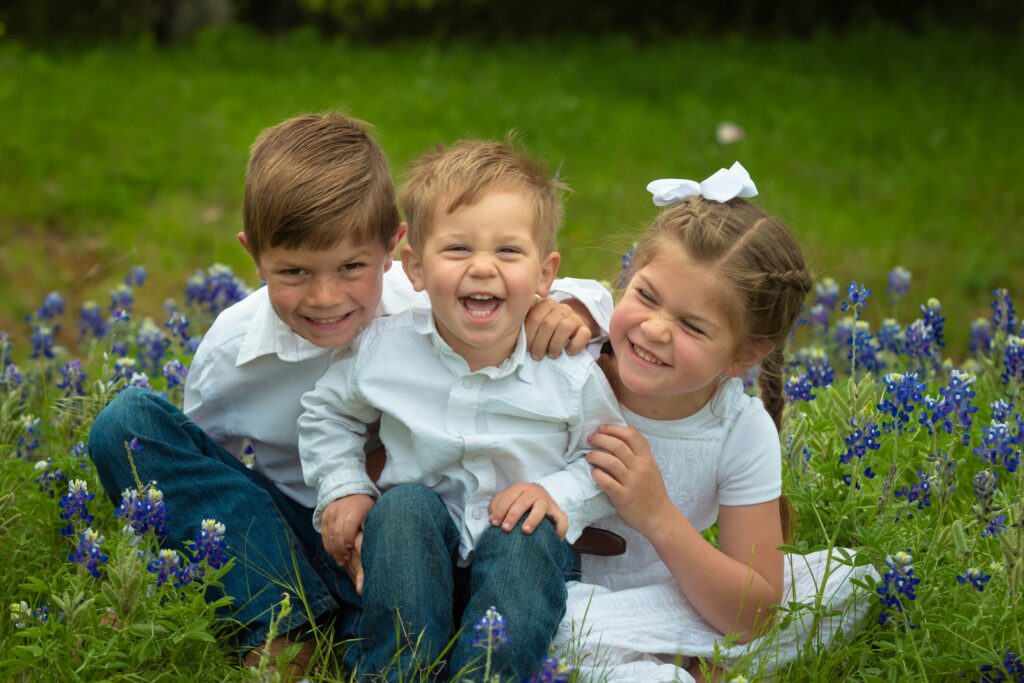
Three smiling children sitting in a field of bluebonnets, symbolizing joy, hope, and belonging in foster and adoptive families.

This powerful insight provides a new way to talk about foster care and adoption—one that acknowledges the real challenges while also speaking with confidence about an even deeper truth. It gives us a reason to tell compelling stories that go beyond the initial hardships and highlight the profound, long-lasting positive impact on families. By sharing this data, we can empower potential foster and adoptive parents with the reassurance that their compassion and commitment can lead to a sense of purpose and flourishing that is truly transformative.

You can download the entire report here: Engagement in US Foster Care and Adoption: 2025 Data and Trends

What If Foster Care Was Built to Heal?

What if the most transformative solutions in foster care don’t come from better policies or expanded programs—but from the restoration of broken relationships?

That’s the core question posed by Praxis, a nonprofit that equips faith-driven founders and innovators to build ventures marked by justice, mercy, and lasting impact. In their recent publication, “A Redemptive Thesis for Foster Care,” they offer not a policy checklist, but a visionary framework—one that invites us to reimagine the foster care system as a space for healing, dignity, and belonging.

Rather than focusing solely on what’s broken, Praxis challenges us to invest not just in what works—but also in what heals: people, especially the adults who shape a child’s daily reality.

Foster Care & Adoption Forum guests, including Venture Partner Charlee Tchividjian (Every Mother’s Advocate, Nonprofit 2022) discuss redemptive moves in foster care at the 2024 Praxis Summit.

People, Not Just Programs

Too often, the foster care conversation centers on system improvement. But what if we started by strengthening the adults around the child—birth parents, foster families, caseworkers, and kin?

When adults are supported, children benefit. This means rethinking how we care for foster parents so they don’t burn out, how we equip caseworkers for trauma-informed leadership, and how we treat struggling parents not as cases, but as people with potential for restoration.

From Reactive Systems to Redemptive Communities

The current system often acts only after harm has occurred. A Redemptive Thesis for Foster Care invites us to shift from reaction to prevention—building networks of care that respond before crisis escalates.

This is the heart of redemptive imagination: believing that proactive, relational investment can do more than any policy tweak. It means engaging neighbors, nonprofits, and churches that serve foster families and children in care—walking with families, not just when they fall apart, but so they don’t have to.

Across the country, some ministries are helping churches step into this space—guiding and equipping them to care well for foster, adoptive, kinship, and vulnerable families in their own communities.

Implications for West Virginia

In a state like West Virginia, where the foster care system serves many children and families facing complex challenges, this redemptive lens offers a hopeful shift.

The thesis doesn’t critique—it inspires. It suggests that while system improvements are necessary, lasting change will come when communities are mobilized to restore relationships, surround families with support, and re-humanize every actor in the process.

That includes entrepreneurs who build tools for caregivers, churches that serve as extended family, and civic leaders who prioritize belonging over bureaucracy. These are the builders of a better future—one rooted in connection, not control.

A Hopeful Way Forward

Ultimately, Praxis’s redemptive thesis calls us to rethink success—not just as fewer entries into foster care, but as more families held together. Not just case closures, but long-term relationships that lead to healing.

Foster care may never be simple—but it can be sacred. If we’re willing to build it around healing instead of just control, we might find a path forward that changes lives for generations.

📖 Read the full thesis here:
https://journal.praxis.co/a-redemptive-thesis-for-foster-care-d44d98e5c231

Building Trust for “More Than Enough” in West Virginia

In West Virginia, we can pursue a bold and achievable vision: More Than Enough for every child and family impacted by foster care. That means more than enough foster and kinship families, more than enough support for biological families, and more than enough wraparound care from churches and communities across our state. A vision like this cannot be achieved by individual efforts of organizations or people. It takes effective collaboration and common strategy to achieve such transformation.

But this kind of collaboration doesn’t begin with vision alone—it starts with trust. Because at the end of the day, organizations don’t collaborate, people do.

To help strengthen relationships and build that foundation of trust, we’re providing you with a simple but powerful tool: “Building Trust Together,” a resource created by the More Than Enough Initiative at the Christian Alliance for Orphans (CAFO).

This image features Scrabble tiles arranged to form the words “I TRUST YOU,” symbolizing the human relationships at the heart of effective foster care collaboration. As West Virginia churches, agencies, and community partners pursue More Than Enough, building trust between individuals becomes essential for lasting impact.

This one-page guide outlines three key commitments that can help churches, agencies, and individuals work together with greater humility, clarity, and unity. Whether you’re launching a new partnership or deepening an existing one, it’s a resource that can help keep the focus on what matters most—our shared mission for West Virginia’s children. To quickly build trust with other members of your collaboration, you can present this document to new partners and collaborators – and use it to shape your commitment to one another.

Let’s keep building—not just programs, but relationships that last—so that More Than Enough becomes reality in every West Virginia community.

Building Trust – More Than Enough WVDownload

Collective Impact and “More Than Enough”

Across the country, and especially in West Virginia, the foster care system is often described with the same words: not enough.

Not enough foster families.
Not enough support for biological parents.
Not enough beds, caseworkers, or solutions.

The More Than Enough vision, championed by CAFO (Christian Alliance for Orphans), offers a bold alternative: a future where every community has more than enough for every child and family who needs it.

Achieving More Than Enough isn’t just about adding more programs or recruiting a few more families. It’s about reshaping entire ecosystems of care — mobilizing churches, nonprofits, businesses, and local leaders to work together in deep, coordinated ways.

This approach mirrors the principles of Collective Impact, as outlined in a classic 2011 article in the Stanford Social Innovation Review by the same name. You can download this article below. Collective Impact teaches us that large-scale social change requires:

  • A Common Agenda: A shared vision for change — like CAFO’s goal of more than enough families and support for every vulnerable child.
  • Shared Measurement: Tracking real progress across communities with consistent, transparent data.
  • Mutually Reinforcing Activities: Each organization and church plays a unique role, but all efforts align toward the same outcome.
  • Continuous Communication: Building trust through regular communication and collaboration.
  • Backbone Support: Dedicated teams that coordinate and sustain the movement across churches, agencies, and organizations.

In foster care, real change won’t happen through isolated efforts. It requires communities to act together — each lifting part of the weight — to complete the “foster care puzzle” of needs around vulnerable children and families.

More Than Enough isn’t just a slogan. It’s an achievable reality when churches, nonprofits, and community members move with unified purpose, clear structure, and shared ownership.

Together, we can replace “not enough” with a new story in the Mountain State: one of hope, healing, and more than enough for every child who needs it.

SSIR Collective Impact Winter 2011Download

Chestnut Mountain Village

Copyright © 2026 Chestnut Mountain Village · All Rights Reserved
Chestnut Mountain Village is an initiative and registered DBA Tradename of Chestnut Mountain Ranch, Inc., a nonprofit organization recognized by the IRS as a tax-exempt 501(c)(3). EIN: 20-1614712. All donations are tax deductible as allowed by law.