• Skip to primary navigation
  • Skip to main content
Chestnut Mountain Village

Chestnut Mountain Village

A ministry of Chestnut Mountain Ranch

  • Home
  • About Us
  • Family Advocacy Ministry
  • CarePortal
  • Events
  • Resources
    • All In Foster Care Summit – Archive
  • News & Articles
  • Contact Us
  • Show Search
Hide Search

Family Advocacy

I Came to Serve. I Found Healing.

Contributed by Teresa, a FAM Volunteer.

I signed up as a volunteer for the Family Advocacy Ministry (FAM) at my church almost two years ago because I was looking for something to help me heal from the loss of my son.  I started by providing a meal for one foster family, and then another, and even had the privilege of celebrating an adoption with that second family.  It was such a joy to be part of that moment, but I also felt like God was calling me to more.

Next, I had the opportunity to provide monthly lunches and gift cards to county social workers as a token of appreciation for their hard work.  It was a joy to be part of this, but my work schedule changed, preventing me from continuing.  I was disappointed, but I kept praying about what God would have me do next.

Teens sitting together on a ledge, representing connection, belonging, and support for vulnerable youth through foster care ministry

In January of 2025, God opened the door to an amazing opportunity!  Through an organization I had been working with, a women’s group I had been led to, and the generous donations made to Foster WV, which is the FAM at my church, I was able to begin a partnership with a local shelter for teens.

Since February 2025, we have been having monthly “Celebration Parties” for the kids at the shelter.  We have had a Talent Show, Mexican Night, Minute to Win It, a Carnival, a professional Magician with his own testimony, a Pool Noodle Obstacle Course, and a Back-to-School Bash.  We provide dinner and enjoy eating with them before the fun begins.  Most of these kids have never had a birthday party, eaten at Chick-fil-A, or played “Pin the Tail on the Donkey”…small things that we take for granted.  They are so appreciative and engaged when we are there, and we have grown to love them and look forward to seeing them every month. 

Recently, we arrived at the facility and one of the boys ran up to us with exciting news.  He told us that he was saved that week.  This young man had grown up in a household that practiced satanic worship.  He wore a satanic ring on his finger and even brought tarot cards to one of our parties.  He asked us if we believed in the cards, because he wanted to do a reading, but we politely declined.  Since then, we have been praying for him.  What a blessing to see this young man give his life to Christ!  He told us he got rid of the ring and the tarot cards, as He realized he had been putting his trust in the wrong things.  Wow!  He’ll be moving on to a foster family soon, and we will miss him terribly, but I am so grateful and humbled that God has allowed us to be a part of his life.

I am so thankful to Foster WV for allowing me to bless these kids, but I am equally grateful that this ministry has brought healing to my broken heart and given me purpose again.  I have made some amazing friendships that will forever be a part of my life.  Thank you from the bottom of my heart!


If stories like Teresa’s stir something in you, the 2026 All In Foster Care Summit is where you can discover how to take your own first step and be part of what God is doing across West Virginia. You can learn more or register for the May 6, 2026 event by clicking HERE or on the Summit logo below.

Pie, People, and a Taste of The Kingdom

Article by Melissa Cargill, Village Community Coordinator.

About 30 years ago, before our wedding, my husband and I were gifted a beautiful ceramic pie plate and a recipe book titled “Pies and Tarts”.  I remember thinking, “What a lovely gift!  If only I were the kind of person who baked pies!”  I enjoyed pie, but I certainly had never baked one from scratch, and I hadn’t really witnessed that either.  My mom is a wonderful cook, but she didn’t love baking, so when we needed a pie, we called a bakery or grabbed one from the frozen section at the grocery store.

Children and adult baking together in a kitchen, illustrating how churches can invite and disciple people into foster care ministry

After we married, I learned that my mother-in-law makes homemade pies AND my husband loves pie!  (The gift was starting to make more sense to me at that point.)  As we visited his family during the early years of our marriage, I had opportunity to sit in the kitchen and watch, as my mother-in-law worked her magic with flour, butter and water, and I also had the opportunity to enjoy the fruits of her labor!

As the years went on, she invited me into the process in small ways.  She talked about what she was doing, shared some of her tips, and occasionally delegated parts of the process (usually things I couldn’t mess up).  As I watched her, I started to think, “Maybe I could make homemade pies, too?”  Eventually, I attempted this in my own kitchen and found myself with a clump of dough impossibly stuck to the counter.  After a quick phone call to my mother-in-law, I realized where I had gone wrong and made note of additional tips and tricks that would help next time (make sure the water and butter are cold, don’t forget to flour the countertop, don’t overwork the dough, etc.)

I’m happy to report that I am now the kind of person who bakes pies…but it was a process!  First, someone invited me into the kitchen, then she gave me a taste of the pie.  She said, “This is definitely something you could learn to do,” and she allowed me to step into the art of baking in ways that felt achievable.  She helped me to see myself differently, coached me along the way, and gave me a taste of the joy that comes from this extra effort.  Certainly, this is not the easiest way to attain a pie, but there is a certain joy and satisfaction that comes along with the process.

When I meet with ministry leaders, I often hear, “We just don’t have enough people to serve all of the children and families who have needs.”  So, how do we encourage and equip those in our congregations and communities to step into this type of ministry?  And how can we walk alongside them when they do?

I would suggest that equipping people for foster care ministry is not much different than baking pie.  There are likely people sitting in church on a Sunday morning who assume they are not the type of people who are qualified or equipped for foster care ministry.  We can start by helping them to see themselves differently.  We won’t all be called to foster, but as followers of Jesus, we are ALL called to care for the vulnerable.  Jesus went out of His way to love and care for the children, the marginalized and those who were often overlooked.  It was His very nature, and we are called to love others the way He has loved us!

Next, we need to find ways to “invite others into the kitchen.”  How can we bring those who have no experience with foster care or the world of child welfare one step closer?  Maybe they could write notes of encouragement to social workers who are often overwhelmed and underappreciated?  Or maybe they could bring a meal to a neighbor family who is currently fostering?  These experiences increase understanding and empathy by allowing volunteers to experience both the beauty and the brokenness that defines foster care. 

As those in our churches take next steps, they will likely have questions and things they will need to process along the way.  (Like the time when my pie crust was stuck to the counter.)  Who will be there to coach and guide, and how will we walk alongside them intentionally as they figure those things out? 

To paraphrase an idea from Jason Johnson, “This is really less about recruiting people to meet a need, and more about discipling people to obey a command.”

How can we help them to process their experience with foster care through the lens of the gospel and the hope we have in Jesus.  This type of ministry isn’t easy, but there is a profound joy that comes from following Jesus into this Kingdom work.  Psalms 34:8 says, “Taste and see that the Lord is good; blessed is the one who takes refuge in him.”  As we follow Jesus’ example, and step into the broken and hard things around us, we also have the privilege of knowing Him and experiencing His love for us in new and deeper ways! 

Now that I’ve been eating homemade pie for a while, there’s probably no going back, and I think it’s much the same in this world of foster care ministry.  Yes, it’s hard, and yes, there is hurt; but there is also a beauty and a joy that’s hard to explain unless you’ve had opportunity to be a part. 

Pie, people, and a taste of the kingdom…it could be the simple art of discipleship, the model Jesus Himself used, is all we really need as we call others into this ministry.


If this vision of inviting and discipling others resonates with you, the 2026 All In Foster Care Summit is where you can learn how to put it into practice in your church and community. You can register or learn more about the May 6, 2026, Summit by clicking HERE or on the Summit logo below.
Bridging the Gaps for Children and Families

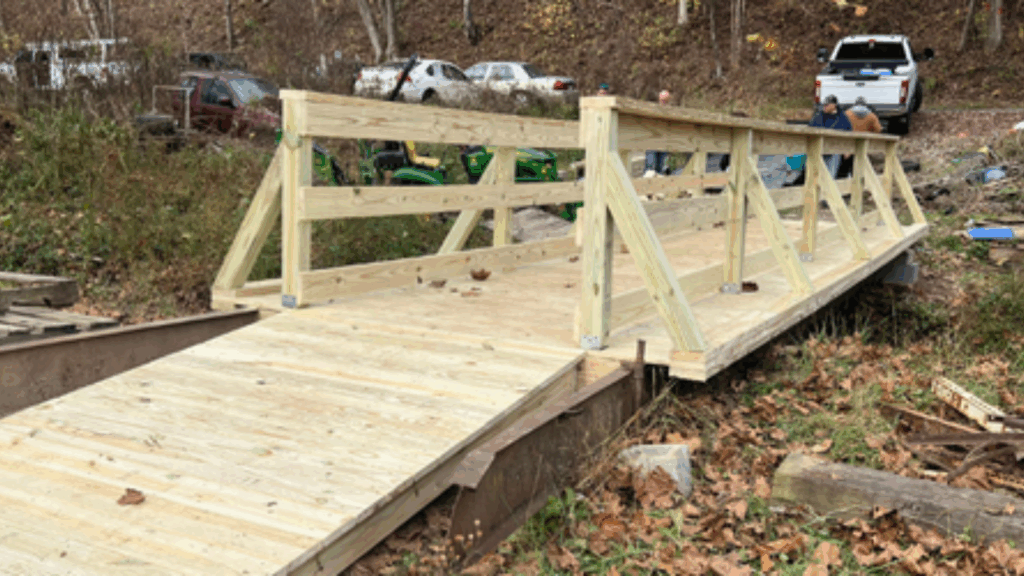
Recently, there was a family who needed a bridge. Their small home sat in a rural part of West Virginia, and the only way to reach the road was by crossing a narrow footbridge over a creek. The bridge had fallen into disrepair, and the condition was quietly brought to the attention of local Child Protective Services (CPS) as a safety concern. The children in the home needed to cross that bridge every day to catch the bus for school. The family was doing their best but could not afford the repair.

In an effort to help the family, CPS staff reached out to a trusted local church to see if they could help.  That church had partnered with Chestnut Mountain Village to launch a Family Advocacy Ministry and had been active in the community for several years providing prayer, meals, childcare, encouragement and relational support for families, as well as other activities to meet practical needs.  The FAM ministry model is a simple and sustainable way for churches to support foster, adoptive, kinship, and vulnerable families.

Over those years, the FAM Advocates at the church developed genuine trust with local Child Protective Service workers through National Hospitality Week, service projects for vulnerable families, and volunteer roles that kept the Advocate connected with CPS staff. It was this foundation of trust and a relationship built over time that prompted CPS to reach out to the local church when the unsafe footbridge came to their attention.

At first, the church dismissed the request as it felt far beyond their capabilities. Their volunteers were trained to provide meals and childcare, not to build bridges. As the Advocate later explained, “We didn’t feel like we had the skills, the resources, or the know-how, but the Lord kept bringing this request back to us, so we decided we could send someone to take a look.”

A church member with construction experience visited the home and assessed the bridge. He reported that the project was likely manageable in a single day with a small team, but the materials would require funds far beyond the ministry budget. Once again, it seemed there was a gap between what the family needed and what the church could provide, but the Lord was still working behind the scenes.

In a follow up conversation, the Advocate explained the situation to the CPS worker. The CPS professional immediately shared that designated state funds were available to purchase the necessary materials. They simply needed someone willing to oversee the project and complete the work. Within a few short weeks, the effort was coordinated, the supplies purchased, the volunteers organized, and the project completed. The family now has safe and reliable passage to their home.

A newly rebuilt wooden bridge spanning a small creek, providing safe access for a rural West Virginia family and illustrating how churches and child welfare partners can close critical gaps for children and parents.

Those who care for children and families know that gaps appear every day, but it does not have to be that way. In this story, everything the family needed already existed in their community, but there were gaps. There was a gap between those who saw the need and those who held the resources. There was also a gap between two different organizations, each carrying a key piece of the solution.

When the Advocate was asked, “How did this happen?” she shared with a big smile, “God made a way.”

With trust, communication, and steady collaboration, the Lord used the relationship between the church and CPS to bridge those gaps and provide what was needed for this family and these children. As organizations, agencies, and churches build deeper trust and work together, we will see more bridges and fewer gaps for West Virginia’s children and families.

Your financial gift to The Village strengthens the partnerships that close these gaps, allowing more children and families to receive the practical, life-changing support they need. Prayerfully consider making a one time or monthly gift to support West Virginia’s most vulnerable children and families.

Foster Care Placement Stability Through Church and Community Support

New research in the Journal of Public Child Welfare confirms what West Virginians are witnessing through local ministries every day. When churches and communities surround foster families with support, foster care placement stability improves and children experience the consistency and love they need to heal.

The study, “Examining the Impact of Participation in a Foster Parent Support Program on Child Welfare Outcomes in Georgia,” was conducted by Dr. Ryan Hanlon of the National Council for Adoption, Abigail Lindner of Worcester Polytechnic Institute, and Katherine Garcia Rosales of Westat. Using three years of data from the Georgia Department of Human Services and the federal Adoption and Foster Care Analysis and Reporting System, the team examined what most affects foster care placement stability. They compared 241 children whose foster families participated in the Promise686 support program with more than 20,000 children in Georgia’s general foster care system.

The results were striking. Children supported through Promise686 experienced far greater placement stability. On average, they had 2.15 placements per child compared to 2.77 for children not involved in the program. For every 1,000 children in care, that means about 620 fewer moves between homes. Each avoided move represents a child who keeps relationships, routines, and trust, key factors for emotional healing and healthy development.

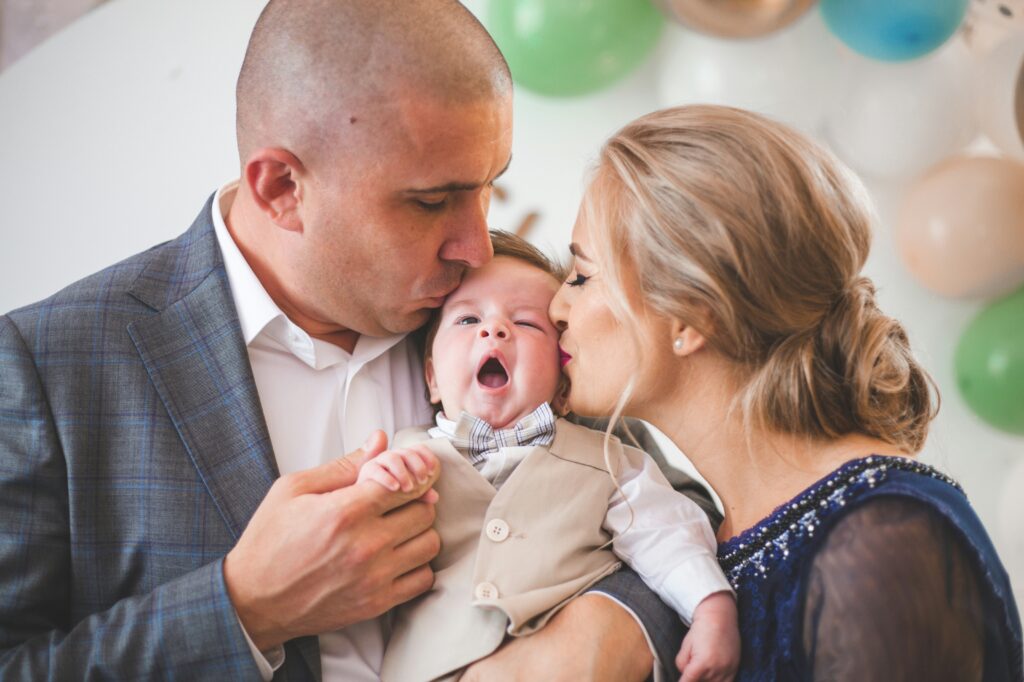
The image illustrates the warmth, security, and love that define foster care placement stability, showing how consistent, supportive relationships help children feel safe, valued, and connected within a family.

Children thrive when their caregivers are steady and supported. The study highlights that stability comes when families are surrounded by people who meet practical needs and offer encouragement. This kind of care makes it more likely that foster parents continue serving, which directly benefits children.

Promise686 builds networks of church and community volunteers who wrap around foster families. These volunteers bring meals, offer childcare, help with errands, and provide prayer and friendship. The study’s findings show that such networks make measurable differences in keeping children stable in their placements and improving outcomes overall.

Here in West Virginia, Chestnut Mountain Village serves as the Mountain State’s sole implementing affiliate for Promise686. Through Family Advocacy Ministries (FAMs) and Care Communities, The Village equips churches to provide the same kind of consistent, Christ-centered support described in the study. These partnerships help foster families endure, children remain connected, and communities grow stronger.

Funded by the Morgridge Family Foundation, this research offers clear evidence of what many already believe: stability in foster care begins with community. When families are supported and surrounded by caring people, children gain safety, belonging, and hope for the future.

Chestnut Mountain Village

Copyright © 2026 Chestnut Mountain Village · All Rights Reserved
Chestnut Mountain Village is an initiative and registered DBA Tradename of Chestnut Mountain Ranch, Inc., a nonprofit organization recognized by the IRS as a tax-exempt 501(c)(3). EIN: 20-1614712. All donations are tax deductible as allowed by law.