• Skip to primary navigation
  • Skip to main content
Chestnut Mountain Village

Chestnut Mountain Village

A ministry of Chestnut Mountain Ranch

  • Home
  • About Us
  • Family Advocacy Ministry
  • CarePortal
  • Events
  • Resources
    • All In Foster Care Summit – Archive
  • News & Articles
  • Contact Us
  • Show Search
Hide Search

News

February is West Virginia Foster Care Month of Prayer

Join churches, organizations, and people from across the state in praying for those impacted by foster care in West Virginia.

Download The Foster Care Prayer Guide to follow along during February 2023!!

Child welfare is an incredibly important issue in the Mountain State. This is especially true right now. The systems are strained, there is more work than the available workforce, there is a consistent need for more foster families, and the work is incredibly complex.

It is easy to focus on the data and be overwhelmed. West Virginia leads the nation in the number of children per capita in foster care. Our rate of removal of children is high compared to the rest of the United States. There are many challenges, and child welfare is a big, complex, and emotional issue.
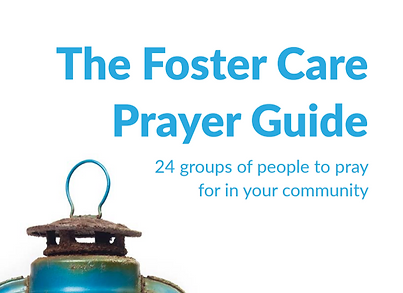
Click the image to download the Foster Care Prayer Guide

Yet, there is always a reason for hope.

Here at Chestnut Mountain Village, we believe that when problems seem insurmountable, our source of hope and guidance has to be something – or someone – other than ourselves. We believe that it is times like these when we must all come unified and humbly to the God of the Universe and ask Him to guide, strengthen, and give hope to every person involved.

Therefore, in conjunction with our friends at the Christian Alliance for Orphans (“CAFO”), The Village is providing the included Foster Care Prayer Guide to West Virginia churches, pastors, community leaders, and citizens. We ask, for those of you who are interested and willing, that you use this guide throughout the month of February to take time and pray for 24 specifically identified groups of people in our communities and state who are touched by foster care.

You can use The Foster Care Prayer Guide to pray for a different group of people each day over 24 days. Alternatively, you could set weekly prayer times or even gather with others for prayer vigils. Regardless of how you go about it, please join us in praying during February 2023 for all of these people in your own communities and state.


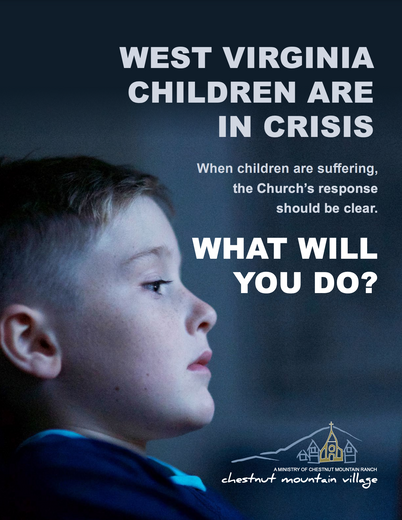
When Children Are Suffering, the Church’s Required Response is Clear: Hope and Homes Series Part 2

This post is part two of Chestnut Mountain Village’s three-part “Hope and Homes” blog series focusing on The Church and Foster Care in West Virginia. The different parts of this series will focus on West Virginia’s foster care challenges, why the Church should be engaged in the issues, and how churches can impact vulnerable children and families in practical and meaningful ways. In this post, we will delve into why churches throughout West Virginia should be engaged in caring for vulnerable children and families.

In our first series post, we explored how the available statistics on West Virginia foster care and kinship care paint a grim picture. On almost every metric, West Virginia does not compare favorably to national averages regarding foster care. In that post, The Village wrote about the fact that West Virginia Children are Suffering and highlighted some startling data about foster care in West Virginia, including:

  • According to WV DHHR legislative statistics at the time, roughly 6,700 West Virginia children lived in foster care. This means that, per capita, West Virginia continued to have one of the nation’s highest rates of children in foster care.
  • Per the State of Babies, for every 1,000 babies born in West Virginia, 25 are removed due to maltreatment. This is more than three times the national average.
  • Furthermore, it has been reported that West Virginia removes children from their homes at nearly 5 times the national average.

We concluded the previous post with simple questions on how the West Virginia Church should respond to this crisis. Furthermore, we asked questions about the responsibility of the Church.

This post will expand on how churches should respond to the suffering of children in the Mountain State. We will explore God’s heart for vulnerable children; the Gospel-motivated reason “why” churches should care for foster children and families; what discipleship means for how we live; and God’s perfect plan to care for vulnerable children and families in our community.

God’s Heart for Vulnerable Children

Looking at the West Virginia foster and kinship care statistics as mere numbers can be easy. However, we must realize that each individual piece of data is a real child created in the image of God. These child image bearers are in vulnerable situations through no fault of the child.

Throughout scripture, God clearly demonstrates His care and compassion for vulnerable children. He is deadly serious about His provision and protection for fatherless children.

“Do not take advantage of the widow or the fatherless. If you do and they cry out to me, I will certainly hear their cry. My anger will be aroused, and I will kill you with the sword; your wives will become widows and your children fatherless.” (Exodus 22:22-24)

“The LORD watches over the foreigner and sustains the fatherless and the widow, but he frustrates the ways of the wicked.” (Psalm 146:9)

“He defends the cause of the fatherless and the widow..” (Deut 10:18a)

“God sets the lonely in families..” (Psalm 68:6a)

Furthermore, God is clear in our responsibility for these children. “Learn to do right; seek justice. Defend the oppressed. Take up the cause of the fatherless; plead the case of the widow.” (Isaiah 1:17)

The Arc of Scripture and the Gospel

If one were to dive deeply into scripture, several themes would reverberate throughout it. These themes include God’s creation, provision, judgment, deliverance, righteousness, faithfulness, mercy, and love. If you study humanity in the scriptures, you will see their sinfulness and inadequacy. However, there is one theme that leaps out more than all of those:

God’s never-ending pursuit of us.

In scripture, God initially dwells with humanity. However, we separate ourselves from Him due to the fall. After that, much of scripture tells the story of God guiding us through the Law and then partially dwelling among us in the Tabernacle and Temple. Eventually, in Christ, God was literally and physically with us again. Even better, He now resides in us through the Holy Spirit.

God never stopped pursuing us despite our broken and desperate situations. He consistently sought and moved toward us. He even went to the point of being broken and crucified so that we would not have to pay the price for our sins. He stepped out of Glory and His comfort for us. When He saw our need, He came after us.

“..rather, he made himself nothing by taking the very nature of a servant, being made in human likeness.” (Philippians 2:7)

“But when the set time had fully come, God sent his Son, born of a woman, born under the law, to redeem those under the law, that we might receive adoption to sonship. Because you are his sons, God sent the Spirit of his Son into our hearts, the Spirit who calls out, ‘Abba, Father.’ So you are no longer a slave, but God’s child; and since you are his child, God has made you also an heir.” (Galatians 4:4-7)

In much of our American culture, we are taught (directly or covertly) that we should pursue comfort and avoid discomfort. We learn that we should run from hard and broken places and people to pursue things that are not uncomfortable. Caring for broken and vulnerable children and families is messy, heartbreaking, and challenging. Most of us avoid such things. Yet, our God does not move away from the vulnerable. He provides for and protects them. He does not move away from the broken and desperate. He relentlessly pursues them.

In light of what God has done, what should we do for vulnerable children and families who come from hard and broken places?

Being and Making Disciples 3

In first-century Jerusalem, the most outstanding pupils of the Jewish text sought to study with a rabbi. These students were called talmidim (talmid,s). In Hebrew, this is translated as disciple. There is much more to a talmid than what we call a student or pupil.

  • A pupil wants to know what the teacher knows in order to get a good grade, complete the class or the degree, or out of respect for the teacher.
  • A talmid wants to be like the teacher, that is to become what the rabbi is.

The talmidim were passionately devoted to their rabbi and noted everything he spoke or did. As the rabbi lived and taught his understanding of the text, his disciples watched and imitated in order to become just like him.

In due course, these talmidim would become teachers themselves and pass on a lifestyle to their own talmidim.

Evidence of the idea that the followers of Christ were to strive to become like him is unmistakable throughout the New Testament.

“Whoever says he abides in Him ought to walk in the same way in which He walked.” (1 John 2:6)

“Be imitators of me, as I am of Christ.” (1 Corinthians 11:1)

“For to this you have been called, because Christ also suffered for you, leaving you an example, so that you might follow in his steps.” (1 Peter 2:21)

“If you love me, you will keep my commandments.” (John 14:15)

“This is my commandment, that you love one another as I have loved you.” (John 15:12)

Eventually, the tamidim of Christ reached a point where they were to leave the rabbi and create new disciples (talmidim). We know this as The Great Commission. In first-century Jerusalem, the words of The Great Commission would have been a clear directive that the disciples had reached a point where they were directed to go and make new talmidim.

”Then Jesus came to them and said, “All authority in heaven and on earth has been given to me. Therefore, go and make disciples of all nations, baptizing them in the name of the Father and of the Son and of the Holy Spirit, and teaching them to obey everything I have commanded you.” (Matthew 28:16-20)

The very nature of discipleship demands that we work to be like Christ and teach others to do the same. Discipleship is not merely Bible study or learning information. Discipleship is living like He lived and doing what He did. However, our culture pushes us to be comfortable and run from complicated, broken people and places.

In light of the suffering children in West Virginia, the heart of God for these children, the example of Christ in His pursuit of us, and our desire to be like Him as true disciples – what then should the Church do?

God’s Plan for the Church

One of the most commonly quoted verses related to how the Church should care for the most vulnerable in our world is James 1:27.

“Pure and genuine religion in the sight of God the Father means caring for orphans and widows in their distress and refusing to let the world corrupt you.” (James 1:27)

Most of us think of this verse as a command that we should help the less fortunate. However, if one reads it closely, something becomes apparent. This verse is not a command. It is merely an observation. In other words, it was simply expected that the outward expression of our inward belief in Jesus Christ (i.e., religion) would naturally manifest itself in caring for those who are suffering and broken. We were not told to care for orphans, but it is simply expected.

Even with the James 1:27 expectation, most of us will never open our homes to foster or adopt children. The truth is that most of us should NOT become foster parents or adopt children. Such activities are not part of our spiritual gifting and do not align with how God has created us. The Church is a place where each person has unique gifts, and all of those gifts work together for God’s Kingdom. The Church was not designed for everyone to do everything, but as a body that works together.

“For just as we have many members in one body and all the members do not have the same function, so we, who are many, are one body in Christ, and individually members one of another.” (Romans 12:4-5)

“For even as the body is one and yet has many members, and all the members of the body, though they are many, are one body, so also is Christ.” (1 Corinthians 12:12)

So, it is expected that God’s people care for the vulnerable, but we do not all have the same function. This means that even though we all may not foster or adopt vulnerable children, we can and should do something. Whether that is simply helping a fostering family with practical chores, mentoring a child, giving resources, praying, or 100 other ways to help – there is something that we can all do. Not every way we can help has to be an extreme task, but when compiled together, it is all significant.

When someone does open their home and heart to children in care, we all can do something to help. Fifty percent (50%) of those who become foster parents quit within the first year of fostering. In addition, around eighty percent (80%) stop fostering within two years. However, when fostering families are surrounded by a loving, structured, and supportive community – 90% of them continue fostering into the second year. When foster families keep fostering longer and stronger, children’s lives are improved.

So, what is a loving, structured, and supportive community that seems necessary to keep families fostering? It is a group of people who all have different roles but work together to care for vulnerable children and families. If that sounds familiar – it is because it is the exact design of the Church.

In other words, when children and families are suffering, the solution that God designed is the Church. The Church is the answer.

God has a heart for vulnerable children and families, Christ suffered and was broken for people from complicated and difficult places, and His disciples should strive to be like Him. The Church is designed to alleviate suffering and care for the most vulnerable.

What will you do? Contact The Village and learn how your Church can help.

  • 1 Significant portions of this section are attributed to and adapted from works by Pastor Josh Rhodes.
  • 2 Significant portions of this section are attributed to and adapted from works by author and speaker, Jason Johnson.
  • 3 Significant portions of this section are attributed to and adapted from “That the World May Know” ministries.

West Virginia DHHR Launches Child Welfare Dashboard

On June 3, 2022, the West Virginia Department of Health and Human Resources debuted its “Child Welfare Dashboard” on the Department’s website. According to press reports, the goal of the Dashboard is to provide the public with more information about what is being done in the realm of West Virginia Child Welfare. The Dashboard will be updated monthly.

The initial Dashboard focuses on foster care statistics and workforce data. Foster care statistics include total children statewide and by county (based upon the child’s worker location), as well as, the type of placement, placement location (in-state or out of state) age groups, and gender of children in care. Workforce data is largely focused on vacancy rates for child protective service and social service workers statewide and by county.

This initial Dashboard is valuable information and a solid start at providing transparency and bringing awareness to child welfare issues both statewide and locally.

We are hopeful that the Dashboard continues to evolve to include additional and more actionable data. Such data would be organized into information valuable for leaders and communities to make solid decisions about needs and action impacts. That being said, the Dashboard is an admirable beginning. We look forward to its continued evolution.

The most current West Virginia Child Welfare Dashboard can be viewed at the link below:

WV DHHR Child Welfare Dashboard

All In Foster Care Summit Attracts Churches and Attendees from Across West Virginia

The first-ever All In Foster Care Summit was held on Wednesday, May 18, 2022, at Chestnut Ridge Church in Morgantown. It was an amazing day filled with world-class speakers, activities, and networking among West Virginia churches, non-profits, businesses, and government organizations. There were dozens of churches in attendance.

The theme of the Summit was going All In for vulnerable children and families. Attendees learned about the realities of foster care throughout the country, the struggles of foster families in West Virginia, the gospel motivated reason “why” churches should care for vulnerable children and families, and how churches can begin ministries focused on foster, kinship, and adoptive kids and families. The day started with the following video, which challenged attendees to consider the most basic solution to providing children with belonging.

In the coming weeks, presentation and panel sessions from the Summit will be made available online.

The State of Foster Care from the Inside: National Survey Paints a Challenging Picture

This national, inaugural survey on foster care included former foster youth, caregivers, and child welfare professionals.

A new survey report, released in May, represents a rare attempt to gather an account of the foster care system directly from those living in or with children in it, and from frontline workers and caregivers working in the system. This first “Voice of the Foster Care Community” report, organized by iFoster, included over 1,000 foster youth, 1,100 caregivers, and nearly 230 child welfare professionals across 49 states.

The results of the survey show a reality where those closest to the system are frustrated and dissatisfied. According to the Executive Summary of the report:

“The overwhelming consensus is that the child welfare system is failing the children and youth it is responsible for raising. It’s failing by allowing children to languish in the system longer than they need with no permanency; failing to be equitable; failing to recognize the lifelong impacts of trauma, and failing to prepare youth to be independent when they age out of care if a permanent family has not been found for them.”

The full report can be found here:

Voice of the Foster Care Community

A Special Invitation from Coach Neal Brown to the “All In Foster Care Summit”

West Virginia head football coach, Neal Brown, invites church leaders to May 18, 2022 Summit, which will rally church leaders to help vulnerable children and families.

West Virginia has the nation’s highest per capita rate of children in foster care.
If you are a West Virginia church leader, we invite you to become part of a church-led foster care movement that is bringing new ideas and practices to the Mountain State.

The All In Foster Care Summit, a Chestnut Mountain Village event, features
national and state child welfare leaders who will help attendees:

• Understand West Virginia’s urgent foster care situation
• See how the church is uniquely positioned to make a difference
• Learn practical ways to care for children & families in foster/kinship care
• Begin to transform foster care in your community

Featured Summit Speakers Include:

Neal Brown
Head Football Coach, West Virginia University

Jason Johnson
Director of Church Mobilization and Engagement at Christian Alliance for
Orphans; Author of Reframing Foster Care, ALL IN Orphan Care, Everyone
Can Do Something and Effectively Engaging Churches

Lynn Johnson
President and Founder, ALL IN Fostering Futures; Former Assistant Secretary
for U.S. Health and Human Services’ Administration for Children and Families.

Plus many other national and state child welfare and church leaders.

Summit Details:

Wednesday, May 18, 2022
Chestnut Ridge Church
Morgantown, West Virginia

Event check-in begins at 8:00 a.m.
Summit will take place from 9:00 a.m. – 4:30 p.m.

Lunch will be provided.

Registration for “All In Foster Care Summit” Now Open

May 18, 2022 Summit will rally West Virginia church leaders to become part of a church-led foster care movement.

West Virginia has the nation’s highest per capita rate of children in foster care.
If you are a West Virginia church leader, we invite you to become part of a church-led foster care movement that is bringing new ideas and practices to the Mountain State.

The All In Foster Care Summit, a Chestnut Mountain Village event, features national and state child welfare leaders who will help attendees:

• Understand West Virginia’s urgent foster care situation;
• See how the church is uniquely positioned to make a difference
• Learn practical ways to care for children & families in foster/kinship care
• Begin to transform foster care in your community

Featured Summit Speakers Include:

Neal Brown
Head Football Coach, West Virginia University

Jason Johnson
Director of Church Mobilization and Engagement at Christian Alliance for
Orphans; Author of Reframing Foster Care, ALL IN Orphan Care, Everyone
Can Do Something and Effectively Engaging Churches

Lynn Johnson
President and Founder, ALL IN Fostering Futures; Former Assistant Secretary
for U.S. Health and Human Services’ Administration for Children and Families.

Plus many other national and state child welfare and church leaders.

Summit Details:

Wednesday, May 18, 2022
Chestnut Ridge Church
Morgantown, West Virginia

Event check-in begins at 8:00 a.m.
Summit will take place from 9:00 a.m. – 4:30 p.m.

Lunch will be provided.

“All In Foster Care Summit” to be Held May 18, 2022, in Morgantown

The Summit will rally West Virginia church leaders to care for foster, adoptive, and kinship children and families.

West Virginia’s children and families are suffering.

  • West Virginia has the highest per capita rate of children in foster care in the nation.
  • Children in foster care have PTSD at rates higher than combat veterans.
  • Former foster youth experience homelessness and incarceration at high levels.

Children in foster or kinship care are not “someone else’s problem” – they are God’s children.

If you are a pastor or leader in a West Virginia church, Chestnut Mountain Village invites you to save the date of Wednesday, May 18, 2022. On that day, church leaders from across the Mountain State, along with national and state child welfare experts, will gather in Morgantown and begin to transform how the West Virginia Church cares for God’s most vulnerable children and families.

Registration and additional information from Chestnut Mountain Village coming soon.

Chestnut Mountain Village Becomes West Virginia Affiliate for The Promise Network

Relationship brings proven methods and tools to help West Virginia churches care for vulnerable children and families

Chestnut Mountain Village (“The Village”), a ministry of Morgantown-based Chestnut Mountain Ranch, has become the West Virginia affiliate of The Promise Network. The Promise Network is a nationwide group of churches and organizations that are committed to living the promise God makes in Psalm 68:6 “to set the lonely in families.”

As part of The Promise Network, The Village and its participating churches can receive training, resources, and ongoing support from Promise 686, a leading national organization that mobilizes church communities to care for vulnerable children. The Promise Network currently supports 1,017 churches in 26 states. The addition of The Village makes West Virginia one of the newest states to join the Network.

“The Village’s status as a Promise Network affiliate will allow our West Virginia church partners to access proven, step-by-step methods and tools to start ministries focused on caring for foster, adoptive and other vulnerable children and families,” said Greg Clutter, Director of Foster Care Initiatives at The Village. “The resources The Village can bring as a Promise Network affiliate will provide multiple ways for churches to both start and sustain these ministries.”

The founding organization of The Promise Network, Promise 686, based in Norcross, Georgia, helps mobilize church communities to care for vulnerable children. Using their technology, tools, and proven methods, they have equipped over 1000 churches across the nation to:

  • Raise awareness around the needs of vulnerable children;
  • Help prevent children from going into foster care by supporting families in need;
  • Recruit and equip foster & adoptive families; and
  • Create Care Communities for those caring for at-risk kids.

“Chestnut Mountain Ranch has a deep understanding of the significant trauma that West Virginia children face. Now they are bringing that understanding and a path for service to churches through The Village. We could not be more pleased to partner with them,” said Andy Cook, CEO of Promise 686.

The driving forces behind The Village partnerships include not only the significant number of West Virginia children in foster care, but, also, the potential poor outcomes for children when there are not enough foster families or community support. West Virginian has the highest per capita number of children in foster care in the U.S. Church and community leaders can begin caring for these children and families by visiting The Village website at cmvwv.org or contacting The Village via email at greg@chestnutmountainranch.org.

West Virginia Children and Families Are Suffering: Hope and Homes Blog Series Part 1

This is part one of Chestnut Mountain Village’s three-part blog series focusing on The Church and Foster Care in West Virginia. The different parts of the “Hope and Homes Series” will focus on West Virginia’s foster care challenges, why the Church should be engaged in the issues, and how churches can impact vulnerable children and families in practical and meaningful ways. In this first installment, we will look at the challenges faced by West Virginia’s children. We will, particularly, look at specific data around foster care and kinship care in the Mountain State.

The available statistics related to West Virginia’s foster and kinship care situation paint a grim picture. On almost every metric, West Virginia does not compare favorably to national averages.

Consider the following sample of information:

  • According to the latest WV DHHR legislative statistics, roughly 6,700 West Virginia children currently live in foster care. This means that, per capita, West Virginia continues to have one of the highest rates of children in foster care in the nation.
  • Per the State of Babies, for every 1,000 babies born in West Virginia, 25 are removed due to maltreatment. This is more than three times the national average.
  • Furthermore, it has been reported that West Virginia removes children from their homes at a rate nearly 5 times the national average.
  • Estimates vary widely on the number of children being raised by their grandparents in West Virginia. However, according to the Grandfamilies Collaborative, there are over 22,000 grandparents responsible for their grandchildren; 33,000 children being raised by kin with no parent present; and 49,698 children living in homes where a relative is head of the household.
  • A 2019 estimate suggested that the vast majority of grandparents in some West Virginia counties lived with and were responsible for grandchildren. At least one county had 82% of grandparents in the county living with and responsible for their grandkids.

The reasons that West Virginia children are placed in foster care or kinship care are different than much of the country. Per Child Trends, the leading reason that children go into foster care in the U.S. is neglect. In West Virginia, neglect is typically involved, but most children are removed from their homes as a direct result of parental substance abuse. The rate of children born in West Virginia with opioid addiction was 51 per 1000 in 2017 (Umer, Loudin, Maxwell et al), compared to 7 per 1000 nationally at that same time (Owens and Hirai).

Individuals who experience foster care often have long-term emotional, social, and mental health impacts that go well beyond the duration of their care outside of the home. In addition, those experiences are strongly negatively correlated with long-term employment, housing, and other important factors.

The data is clear, many West Virginia children and families are suffering. This includes extended families that often bear the brunt of the responsibilities for children when parents are unable to care for them. In a situation like this, how does the Church respond? What are its Biblical responsibilities? Contact The Village to learn how your church can join the movement to care for vulnerable children and families in your community.

contact the village

Chestnut Mountain Ranch launches “The Village,” bringing hope + homes

West Virginia has nearly 7,000 children in foster care. This is the highest per capita rate in the United States. For every 1,000 babies born in West Virginia, nearly 25 are removed due to neglect or other mistreatment. This is more than three times the national average. In response to this foster care crisis and needs, Chestnut Mountain Ranch has launched Chestnut Mountain Village (“The Village”).

Outcomes for children in foster care are not good. Up to one in four children who have been in foster care will experience post-traumatic stress disorder (PTSD). Young people who leave foster care without forever families are more likely to experience homelessness, addiction, and human trafficking.

In speaking with front-line child welfare workers in West Virginia, Chestnut Mountain Ranch (“the Ranch”) has consistently heard that more and longer serving foster families are desperately needed to improve outcomes for children in foster care.

The Village is a new Ranch ministry creating Christ-centered communities to bring hope and homes to vulnerable West Virginia children and families. The Village will start by working with churches statewide to create local ministries that support foster, adoptive, and vulnerable children and their families. This practical support will increase the number of foster families and the time that those families serve. The result will be improved outcomes for West Virginia’s children.

Be on the lookout for more news in the coming months as The Village grows across the Mountain State!!

  • « Go to Previous Page
  • Page 1
  • Page 2

Chestnut Mountain Village

Copyright © 2026 Chestnut Mountain Village · All Rights Reserved
Chestnut Mountain Village is an initiative and registered DBA Tradename of Chestnut Mountain Ranch, Inc., a nonprofit organization recognized by the IRS as a tax-exempt 501(c)(3). EIN: 20-1614712. All donations are tax deductible as allowed by law.