• Skip to primary navigation
  • Skip to main content
Chestnut Mountain Village

Chestnut Mountain Village

A ministry of Chestnut Mountain Ranch

  • Home
  • About Us
  • Family Advocacy Ministry
  • CarePortal
  • Events
  • Resources
    • All In Foster Care Summit – Archive
  • News & Articles
  • Contact Us
  • Show Search
Hide Search

threepsdev

An Invitation to the 2023, “All In Foster Care Summit” from Dr. John DeGarmo

Register Now for 2023 All In Foster Care Summit

International foster care expert, consultant, author, and TED Talk speaker, Dr. John DeGarmo, offers a special invitation to the All In Foster Care Summit being held on May 3, 2023 in Hurricane, West Virginia at River Ridge Church Teays Valley.

Dr. DeGarmo is the author of multiple books including Faith and Foster Care and The Church and Foster Care; a foster parent of over 60 children through the years; and serves as the director of The Foster Care Institute. He will be speaking on “The Church, Faith, and Foster Care” and is part of a lineup of national and state experts joining the Summit.

The All In Foster Care Summit is a transformative event aimed at improving the state of foster care in West Virginia. With West Virginia having the highest rate of children in foster care in the nation, the system is struggling to keep up. However, with the collaboration of families, churches, and community partners, we can all make a tremendous impact on solving the problems.

The Summit, to be held on May 3, 2023, at River Ridge Church Teays Valley in Hurricane, WV, is a platform for like-minded individuals, church leaders, members of foster/kinship care organizations, and anyone interested in reforming foster care to come together and make a positive change in the lives of God’s most vulnerable children and families. The Summit will feature national and state child welfare experts, including, in addition to Dr. DeGarmo, Jason Weber, National Director of Foster Care Initiatives at the Christian Alliance for Orphans; and Lynn Johnson, President and Founder of ALL IN Fostering Futures and the former Assistant Secretary for The U.S. Health and Human Services Administration for Children and Families.
At the Summit, attendees will learn about the current state of foster care in West Virginia and how they can work together to create a brighter future for the children and families who need support and resources. The event is free to attend and registration is now open. So, come join us and be a part of transforming foster care in West Virginia!

The All In Foster Care Summit is a Chestnut Mountain Village event.
Click here to register now

February is West Virginia Foster Care Month of Prayer

Join churches, organizations, and people from across the state in praying for those impacted by foster care in West Virginia.

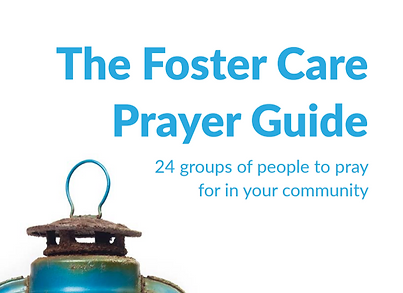
Download The Foster Care Prayer Guide to follow along during February 2023!!

Child welfare is an incredibly important issue in the Mountain State. This is especially true right now. The systems are strained, there is more work than the available workforce, there is a consistent need for more foster families, and the work is incredibly complex.

It is easy to focus on the data and be overwhelmed. West Virginia leads the nation in the number of children per capita in foster care. Our rate of removal of children is high compared to the rest of the United States. There are many challenges, and child welfare is a big, complex, and emotional issue. Download The Foster Care Prayer Guide by clicking on the image.

Yet, there is always a reason for hope.

Here at Chestnut Mountain Village, we believe that when problems seem insurmountable, our source of hope and guidance has to be something – or someone – other than ourselves. We believe that it is times like these when we must all come unified and humbly to the God of the Universe and ask Him to guide, strengthen, and give hope to every person involved.

Therefore, in conjunction with our friends at the Christian Alliance for Orphans (“CAFO”), The Village is providing the included Foster Care Prayer Guide to West Virginia churches, pastors, community leaders, and citizens. We ask, for those of you who are interested and willing, that you use this guide throughout the month of February to take time and pray for 24 specifically identified groups of people in our communities and state who are touched by foster care.

You can use The Foster Care Prayer Guide to pray for a different group of people each day over 24 days. Alternatively, you could set weekly prayer times or even gather with others for prayer vigils. Regardless of how you go about it, please join us in praying during February 2023 for all of these people in your own communities and state.

February is West Virginia Foster Care Month of Prayer

Join churches, organizations, and people from across the state in praying for those impacted by foster care in West Virginia.

Download The Foster Care Prayer Guide to follow along during February 2023!!

Child welfare is an incredibly important issue in the Mountain State. This is especially true right now. The systems are strained, there is more work than the available workforce, there is a consistent need for more foster families, and the work is incredibly complex.

It is easy to focus on the data and be overwhelmed. West Virginia leads the nation in the number of children per capita in foster care. Our rate of removal of children is high compared to the rest of the United States. There are many challenges, and child welfare is a big, complex, and emotional issue.

Click the image to download the Foster Care Prayer Guide

Yet, there is always a reason for hope.

Here at Chestnut Mountain Village, we believe that when problems seem insurmountable, our source of hope and guidance has to be something – or someone – other than ourselves. We believe that it is times like these when we must all come unified and humbly to the God of the Universe and ask Him to guide, strengthen, and give hope to every person involved.

Therefore, in conjunction with our friends at the Christian Alliance for Orphans (“CAFO”), The Village is providing the included Foster Care Prayer Guide to West Virginia churches, pastors, community leaders, and citizens. We ask, for those of you who are interested and willing, that you use this guide throughout the month of February to take time and pray for 24 specifically identified groups of people in our communities and state who are touched by foster care.

You can use The Foster Care Prayer Guide to pray for a different group of people each day over 24 days. Alternatively, you could set weekly prayer times or even gather with others for prayer vigils. Regardless of how you go about it, please join us in praying during February 2023 for all of these people in your own communities and state.

Coach Neal Brown – The Power of Teamwork and Being All In

This was a presentation from the May 18, 2022 “All In Foster Care Summit” held in Morgantown, WV. The Summit, a Chestnut Mountain Village event, was held at Chestnut Ridge Church and attended by church leaders from throughout West Virginia.

WVU Head Football Coach talks about the power of teamwork and being “all in” for a goal or mission.

Pastor Josh Rhodes – The Foster WV Example: A Family Advocacy Ministry in West Virginia

This was a presentation from the May 18, 2022 “All In Foster Care Summit” held in Morgantown, WV. The Summit, a Chestnut Mountain Village event, was held at Chestnut Ridge Church and attended by church leaders from throughout West Virginia.

Chestnut Ridge Church Pastor of Ministries, Josh Rhodes, talks about his church’s family advocacy ministry, Foster WV, and his own journey through being a foster parent.

Panel – A Mountain State Discussion: Foster, Adoptive, and Kinship Care Across West Virginia

This was a discussion from the May 18, 2022 “All In Foster Care Summit” held in Morgantown, WV. The Summit, a Chestnut Mountain Village event, was held at Chestnut Ridge Church and attended by church leaders from throughout West Virginia.

A Discussion about foster, kinship, and other care for vulnerable kids and families in West Virginia.

Moderator: Jessi Williams

Panelists: Rachel Kinder. Marissa Sanders. Michelle Thompson, Pamela Woodman-Kaehler

Lynn Johnson – National Foster Care Crisis and a Solution: Being All In for Children & Families

This was a presentation from the May 18, 2022 “All In Foster Care Summit” held in Morgantown, WV. The Summit, a Chestnut Mountain Village event, was held at Chestnut Ridge Church and attended by church leaders from throughout West Virginia.

Lynn Johnson talks about The National Foster Care Situation and the Solution of being All In for Children and Families.

Jessi Williams – “Three Precious Things” Exercise and Intro

This was a presentation from the May 18, 2022 “All In Foster Care Summit” held in Morgantown, WV. The Summit, a Chestnut Mountain Village event, was held at Chestnut Ridge Church and attended by church leaders from throughout West Virginia.

Jessi Williams led Summit Attendees through a powerful exercise to imagine what it is like for children who enter foster care. Jessi is the Director of Support Services for Promise686. She completed her undergraduate work in Child and Family Development before earning her Master of Social Work at the University of Georgia. Jessi has previously worked in private adoptions and foster care and is passionate about helping churches engage in the welfare of children in their communities.

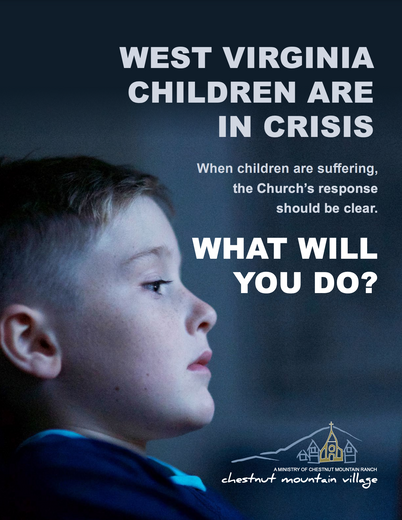
West Virginia Children Are In Crisis

Learn about the foster care crisis in West Virginia and Chestnut Mountain Village’s work.

Download the full brochure (PDF)

Panel – A Discussion on How to Care: Best Practices from Across the Nation

This was a discussion from the May 18, 2022 “All In Foster Care Summit” held in Morgantown, WV. The Summit, a Chestnut Mountain Village event, was held at Chestnut Ridge Church and attended by church leaders from throughout West Virginia.

National leaders in faith-based foster care initiatives discuss best practices in how churches can become involved in caring for vulnerable children and families in West Virginia.

Moderator: Greg Clutter

Panelists: Andy Cook, Jason Johnson, Lynn Johnson, Lesli Reece

Jason Johnson – The Power of “Why”: A Gospel-Motivated Call to Care

This was a presentation from the May 18, 2022 “All In Foster Care Summit” held in Morgantown, WV. The Summit, a Chestnut Mountain Village event, was held at Chestnut Ridge Church and attended by church leaders from throughout West Virginia.

Jason Johnson speaks on the gospel-motivated reason WHY churches should be involved in foster, kinship, and other care for vulnerable children and families.

Jason is a writer and speaker who encourages families and equips churches in their foster care and adoption journeys.

2022 All In Foster Care Summit Online

This playlist contains the presentations and panel discussions from the May 18, 2022 “All In Foster Care Summit” held in Morgantown, WV. The Summit, a Chestnut Mountain Village event, was held at Chestnut Ridge Church and attended by church leaders from throughout West Virginia.

West Virginia has the nation’s highest per capita rate of children in foster care. The Summit was an invitation for attendees to be part of a church-led foster care movement bringing new ideas and practices to West Virginia.

The All In Foster Care Summit featured national and state child welfare leaders who helped attendees:

  • Understand West Virginia’s urgent foster care situation
  • See how the church is uniquely positioned to make a difference
  • Learn practical ways to care for children & families in foster/kinship care
  • Begin to transform foster care in their communities

Intro to Family Advocacy Ministry for Churches/Pastors

Care Community Stories: Smith + Cargill

Care Community story from Chestnut Ridge Church in Morgantown, WV.

Care Community Stories: Austin + Hasenmyer

Care Community story from Chestnut Ridge Church in Morgantown, WV

When Children Are Suffering, the Church’s Required Response is Clear: Hope and Homes Series Part 2

This post is part two of Chestnut Mountain Village’s three-part “Hope and Homes” blog series focusing on The Church and Foster Care in West Virginia. The different parts of this series will focus on West Virginia’s foster care challenges, why the Church should be engaged in the issues, and how churches can impact vulnerable children and families in practical and meaningful ways. In this post, we will delve into why churches throughout West Virginia should be engaged in caring for vulnerable children and families.

In our first series post, we explored how the available statistics on West Virginia foster care and kinship care paint a grim picture. On almost every metric, West Virginia does not compare favorably to national averages regarding foster care. In that post, The Village wrote about the fact that West Virginia Children are Suffering and highlighted some startling data about foster care in West Virginia, including:

  • According to WV DHHR legislative statistics at the time, roughly 6,700 West Virginia children lived in foster care. This means that, per capita, West Virginia continued to have one of the nation’s highest rates of children in foster care.
  • Per the State of Babies, for every 1,000 babies born in West Virginia, 25 are removed due to maltreatment. This is more than three times the national average.
  • Furthermore, it has been reported that West Virginia removes children from their homes at nearly 5 times the national average.

We concluded the previous post with simple questions on how the West Virginia Church should respond to this crisis. Furthermore, we asked questions about the responsibility of the Church.

This post will expand on how churches should respond to the suffering of children in the Mountain State. We will explore God’s heart for vulnerable children; the Gospel-motivated reason “why” churches should care for foster children and families; what discipleship means for how we live; and God’s perfect plan to care for vulnerable children and families in our community.

God’s Heart for Vulnerable Children

Looking at the West Virginia foster and kinship care statistics as mere numbers can be easy. However, we must realize that each individual piece of data is a real child created in the image of God. These child image bearers are in vulnerable situations through no fault of the child.

Throughout scripture, God clearly demonstrates His care and compassion for vulnerable children. He is deadly serious about His provision and protection for fatherless children.

“Do not take advantage of the widow or the fatherless. If you do and they cry out to me, I will certainly hear their cry. My anger will be aroused, and I will kill you with the sword; your wives will become widows and your children fatherless.” (Exodus 22:22-24)

“The LORD watches over the foreigner and sustains the fatherless and the widow, but he frustrates the ways of the wicked.” (Psalm 146:9)

“He defends the cause of the fatherless and the widow..” (Deut 10:18a)

“God sets the lonely in families..” (Psalm 68:6a)

Furthermore, God is clear in our responsibility for these children. “Learn to do right; seek justice. Defend the oppressed. Take up the cause of the fatherless; plead the case of the widow.” (Isaiah 1:17)

The Arc of Scripture and the Gospel

If one were to dive deeply into scripture, several themes would reverberate throughout it. These themes include God’s creation, provision, judgment, deliverance, righteousness, faithfulness, mercy, and love. If you study humanity in the scriptures, you will see their sinfulness and inadequacy. However, there is one theme that leaps out more than all of those:

God’s never-ending pursuit of us.

In scripture, God initially dwells with humanity. However, we separate ourselves from Him due to the fall. After that, much of scripture tells the story of God guiding us through the Law and then partially dwelling among us in the Tabernacle and Temple. Eventually, in Christ, God was literally and physically with us again. Even better, He now resides in us through the Holy Spirit.

God never stopped pursuing us despite our broken and desperate situations. He consistently sought and moved toward us. He even went to the point of being broken and crucified so that we would not have to pay the price for our sins. He stepped out of Glory and His comfort for us. When He saw our need, He came after us.

“..rather, he made himself nothing by taking the very nature of a servant, being made in human likeness.” (Philippians 2:7)

“But when the set time had fully come, God sent his Son, born of a woman, born under the law, to redeem those under the law, that we might receive adoption to sonship. Because you are his sons, God sent the Spirit of his Son into our hearts, the Spirit who calls out, ‘Abba, Father.’ So you are no longer a slave, but God’s child; and since you are his child, God has made you also an heir.” (Galatians 4:4-7)

In much of our American culture, we are taught (directly or covertly) that we should pursue comfort and avoid discomfort. We learn that we should run from hard and broken places and people to pursue things that are not uncomfortable. Caring for broken and vulnerable children and families is messy, heartbreaking, and challenging. Most of us avoid such things. Yet, our God does not move away from the vulnerable. He provides for and protects them. He does not move away from the broken and desperate. He relentlessly pursues them.

In light of what God has done, what should we do for vulnerable children and families who come from hard and broken places?

Being and Making Disciples 3

In first-century Jerusalem, the most outstanding pupils of the Jewish text sought to study with a rabbi. These students were called talmidim (talmid,s). In Hebrew, this is translated as disciple. There is much more to a talmid than what we call a student or pupil.

  • A pupil wants to know what the teacher knows in order to get a good grade, complete the class or the degree, or out of respect for the teacher.
  • A talmid wants to be like the teacher, that is to become what the rabbi is.

The talmidim were passionately devoted to their rabbi and noted everything he spoke or did. As the rabbi lived and taught his understanding of the text, his disciples watched and imitated in order to become just like him.

In due course, these talmidim would become teachers themselves and pass on a lifestyle to their own talmidim.

Evidence of the idea that the followers of Christ were to strive to become like him is unmistakable throughout the New Testament.

“Whoever says he abides in Him ought to walk in the same way in which He walked.” (1 John 2:6)

“Be imitators of me, as I am of Christ.” (1 Corinthians 11:1)

“For to this you have been called, because Christ also suffered for you, leaving you an example, so that you might follow in his steps.” (1 Peter 2:21)

“If you love me, you will keep my commandments.” (John 14:15)

“This is my commandment, that you love one another as I have loved you.” (John 15:12)

Eventually, the tamidim of Christ reached a point where they were to leave the rabbi and create new disciples (talmidim). We know this as The Great Commission. In first-century Jerusalem, the words of The Great Commission would have been a clear directive that the disciples had reached a point where they were directed to go and make new talmidim.

”Then Jesus came to them and said, “All authority in heaven and on earth has been given to me. Therefore, go and make disciples of all nations, baptizing them in the name of the Father and of the Son and of the Holy Spirit, and teaching them to obey everything I have commanded you.” (Matthew 28:16-20)

The very nature of discipleship demands that we work to be like Christ and teach others to do the same. Discipleship is not merely Bible study or learning information. Discipleship is living like He lived and doing what He did. However, our culture pushes us to be comfortable and run from complicated, broken people and places.

In light of the suffering children in West Virginia, the heart of God for these children, the example of Christ in His pursuit of us, and our desire to be like Him as true disciples – what then should the Church do?

God’s Plan for the Church

One of the most commonly quoted verses related to how the Church should care for the most vulnerable in our world is James 1:27.

“Pure and genuine religion in the sight of God the Father means caring for orphans and widows in their distress and refusing to let the world corrupt you.” (James 1:27)

Most of us think of this verse as a command that we should help the less fortunate. However, if one reads it closely, something becomes apparent. This verse is not a command. It is merely an observation. In other words, it was simply expected that the outward expression of our inward belief in Jesus Christ (i.e., religion) would naturally manifest itself in caring for those who are suffering and broken. We were not told to care for orphans, but it is simply expected.

Even with the James 1:27 expectation, most of us will never open our homes to foster or adopt children. The truth is that most of us should NOT become foster parents or adopt children. Such activities are not part of our spiritual gifting and do not align with how God has created us. The Church is a place where each person has unique gifts, and all of those gifts work together for God’s Kingdom. The Church was not designed for everyone to do everything, but as a body that works together.

“For just as we have many members in one body and all the members do not have the same function, so we, who are many, are one body in Christ, and individually members one of another.” (Romans 12:4-5)

“For even as the body is one and yet has many members, and all the members of the body, though they are many, are one body, so also is Christ.” (1 Corinthians 12:12)

So, it is expected that God’s people care for the vulnerable, but we do not all have the same function. This means that even though we all may not foster or adopt vulnerable children, we can and should do something. Whether that is simply helping a fostering family with practical chores, mentoring a child, giving resources, praying, or 100 other ways to help – there is something that we can all do. Not every way we can help has to be an extreme task, but when compiled together, it is all significant.

When someone does open their home and heart to children in care, we all can do something to help. Fifty percent (50%) of those who become foster parents quit within the first year of fostering. In addition, around eighty percent (80%) stop fostering within two years. However, when fostering families are surrounded by a loving, structured, and supportive community – 90% of them continue fostering into the second year. When foster families keep fostering longer and stronger, children’s lives are improved.

So, what is a loving, structured, and supportive community that seems necessary to keep families fostering? It is a group of people who all have different roles but work together to care for vulnerable children and families. If that sounds familiar – it is because it is the exact design of the Church.

In other words, when children and families are suffering, the solution that God designed is the Church. The Church is the answer.

God has a heart for vulnerable children and families, Christ suffered and was broken for people from complicated and difficult places, and His disciples should strive to be like Him. The Church is designed to alleviate suffering and care for the most vulnerable.

What will you do? Contact The Village and learn how your Church can help.

  • 1 Significant portions of this section are attributed to and adapted from works by Pastor Josh Rhodes.
  • 2 Significant portions of this section are attributed to and adapted from works by author and speaker, Jason Johnson.
  • 3 Significant portions of this section are attributed to and adapted from “That the World May Know” ministries.

A Family Advocacy Ministry in West Virginia

Chestnut Ridge Church Pastor of Ministries, Josh Rhodes, talks about his church’s family advocacy ministry, Foster WV, and his own journey through being a foster parent.

West Virginia DHHR Launches Child Welfare Dashboard

On June 3, 2022, the West Virginia Department of Health and Human Resources debuted its “Child Welfare Dashboard” on the Department’s website. According to press reports, the goal of the Dashboard is to provide the public with more information about what is being done in the realm of West Virginia Child Welfare. The Dashboard will be updated monthly.

The initial Dashboard focuses on foster care statistics and workforce data. Foster care statistics include total children statewide and by county (based upon the child’s worker location), as well as, the type of placement, placement location (in-state or out of state) age groups, and gender of children in care. Workforce data is largely focused on vacancy rates for child protective service and social service workers statewide and by county.

This initial Dashboard is valuable information and a solid start at providing transparency and bringing awareness to child welfare issues both statewide and locally.

We are hopeful that the Dashboard continues to evolve to include additional and more actionable data. Such data would be organized into information valuable for leaders and communities to make solid decisions about needs and action impacts. That being said, the Dashboard is an admirable beginning. We look forward to its continued evolution.

The most current West Virginia Child Welfare Dashboard can be viewed at the link below:

WV DHHR Child Welfare Dashboard

  • « Go to Previous Page
  • Page 1
  • Page 2
  • Page 3
  • Go to Next Page »

Chestnut Mountain Village

Copyright © 2026 Chestnut Mountain Village · All Rights Reserved
Chestnut Mountain Village is an initiative and registered DBA Tradename of Chestnut Mountain Ranch, Inc., a nonprofit organization recognized by the IRS as a tax-exempt 501(c)(3). EIN: 20-1614712. All donations are tax deductible as allowed by law.